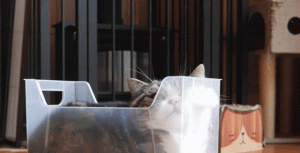
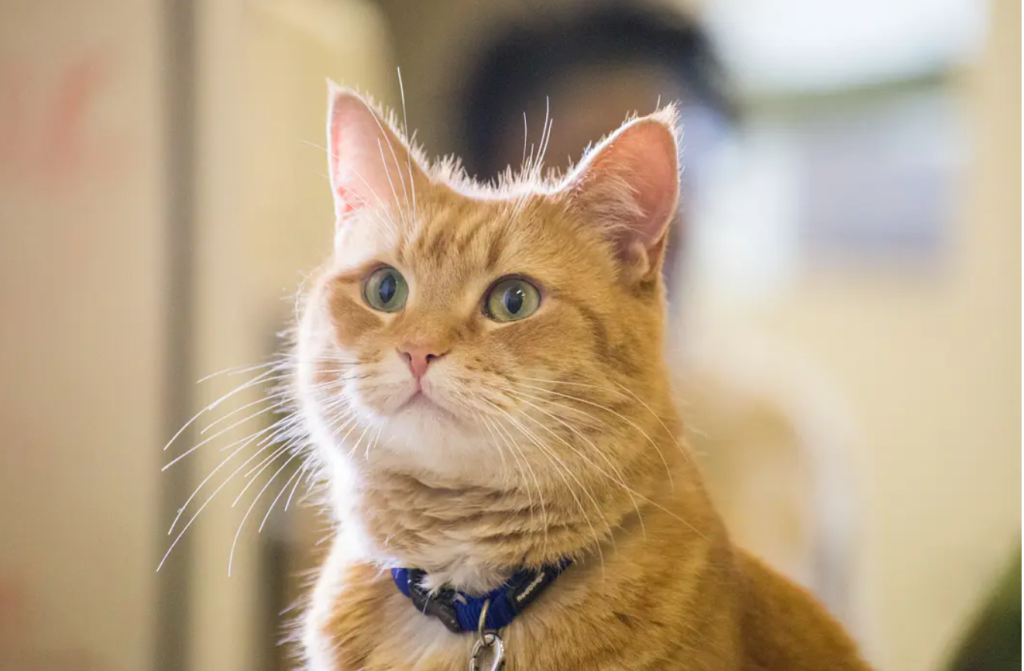
Cats are beloved by countless people. Especially in youth culture, they are not only companions for many professionals after work, soothing the souls of urbanites, but have even risen to the status of a spiritual symbol, with the phrase “The world is messy, but the cat is here to patch things up” becoming a kind of rallying cry. In the past half year, due to the popularity of a certain background music (BGM), cats have once again been referred to by the code name “Hakimi,” highlighting their unique position in the hearts of the younger generation. We love cats, and we also know a great deal about them. Many cat owners are familiar with their cats’ temperaments, preferences, and the meanings behind different sounds. They understand how certain spots on a cat’s body can bring them different levels of pleasure. Additionally, they know the ideal balance of cat food, why cats love to curl up in boxes, and how to prevent stress in cats.However, in reality, aside from these common knowledge points, there is still much we don’t know about cats. Take the term “cat slave” for instance — the human-animal relationship implied by this term is worth questioning. Unlike dogs, whose loyalty, obedience, and love for social interaction make them a species that has been domesticated by humans from the start, cats, with their aloofness, independence, and fear of strangers, seem to place themselves as the “masters” of humans, making them difficult to domesticate. So, how did cats become pets? Or, in the long course of history, could it be that they have actually domesticated humans?
-
The Invincible Cat: Conquering Humans
We seem to understand the sounds of cats quite well: the soft “meow” signifies affection or hunger, a short meow indicates a threat, the hissing sound usually expresses anger or warning, while purring is the sound cats make when they feel comfortable. These seem like “universal truths” that we’ve gathered over time through our interactions with cats. There are even apps on the market that claim to translate “cat language” based on these truths. But is that really the case? Simple tests show that for the same scenario, not only do cats from different regions and breeds respond differently, but individual cats also react differently. In an experiment where a group of college students were asked to distinguish the context of meowing, the correct identification rate was only slightly better than random guessing. Moreover, studies comparing the sounds of wild cats and domestic cats in the same situations further prove one point: the meows of cats (domestic cats) are their way of attracting human affection and “pleasing” us. To use Wittgenstein’s terminology, the meow is part of the “language game” between cats and humans, and its meaning can only be understood when placed in the specific context of human-cat interaction. This suggests that cats are actually “domesticating” us. Their innate or developed traits allow them to conquer us with their charm, even though they may have aloofness, bad temper, and other “flaws.” Despite all of that, we still fall into their “trap” and can’t stop loving them. So what is their secret weapon? Losos believes it’s their friendly nature. Cats can approach humans willingly, and even when encountering strangers, they can still raise their tails to show friendliness instead of tucking their tails or running away. This trait of domestic cats is significantly different from their ancestor, the African wildcat. Without further evidence, we could say this is a trait that evolved during the domestication process. Being friendly is not a result of their domestication; rather, it is a trait that allows them to choose their future, conquering humans and living a comfortable life as our “masters.”Why did cats develop this friendly trait? Losos’ research points to their numbers and social tendencies. Among wild cats, the species most similar to domestic cats is the lion. These majestic creatures live in pride groups, composed of one strong male lion, several female lions with their cubs. Lions also greet each other by raising their tails and rubbing against each other, showing a friendly affection, much like cats do. Social living helps lions reproduce, hunt, and protect their territories. Domestic cats do the same—social living allows them to share resources and sustain their survival. Although we typically think of cats as solitary creatures, outdoor stray cats often live in fixed groups and occupy the same territories. While they may not show affection, they survive together in a loose, cooperative atmosphere. When food is available, they share. If two cats meet on the street, they silently allow each other to roam within the same territory. One obvious behavior is that in order to ensure “cat proliferation,” cats in a territory will often mate repeatedly, seeking contact with as many opposite-sex cats as possible. This is why we often hear the loud cries of cats in heat in the neighborhood. Ultimately, cats are highly social animals, and their friendly behavior is part of this social nature.

-
Wild Cat Evolution: Super Four-Legged Creatures!
However, given their domesticated side, this also means that cats’ evolutionary process has been deeply influenced, or even controlled, by humans. How did cats, or domestic cats, evolve from ancient wildcats into the familiar form we know today? What role did humans play in this evolution? Losos dedicates a significant portion of his research to explore this. One surprising conclusion from his research is that, to date, evidence points toward the fact that different breeds of domestic cats—whether Siamese, Ragdoll, or short-haired cats—almost all come from the same ancestor, the North African wildcat. In the evolutionary tree, domestic cats became an independent species, parallel to other wild cats like the desert cat or the wildcat. This suggests that the evolution of cats was not a global process where wildcats from different regions were domesticated simultaneously, which led to hybridization and the formation of current cat breeds. Instead, the ancient North African wildcat was domesticated first, then brought to various parts of the world, continuing the domestication process, which explains why cats from different regions are all branches of the same species. Using postmodern academic jargon, this is similar to Edward Said’s concept of “theory travel.” The evolution of cats can be seen as a long “domestication journey”—early humans connected with cats before civilization even began, selecting them as companions and spreading them worldwide, localizing them in different regions.It’s worth mentioning that this conclusion is still debated, and new evidence may challenge it. For example, Losos mentions that cats in China were first recorded during the Han dynasty, with related cat bones discovered. However, these domesticated cats do not show a close relation to the North African wildcat, but instead are more closely related to the leopard cat (Asian wildcat). This is just a hypothesis for now, and due to limitations in DNA research, we cannot definitively reconstruct the cat breeds of over 2,000 years ago to overturn the existing theory. What we can do is either fill in the gaps in the North African wildcat theory or look for more evidence to reorganize the narrative. Until breakthroughs occur, we can only wait patiently. What’s more important is the role humans played in this: why did we choose cats? If the domestication of dogs was for guarding homes and protecting property, then the domestication of cats originated from a much more common but almost forgotten cat trait: catching mice. This takes us back to Tom from Tom and Jerry—when storing grain, rodent infestations often result in food loss, causing hunger. Once humans realized that cats could control the mouse population, they began to select them, making them part of the human workforce. In return, humans fed them, creating a symbiotic relationship. Later, cats’ evolution—becoming friendly—allowed them to move beyond just being pest controllers, turning them into “master cats.” With the rise of entertainment and aesthetic value, humans began to selectively breed cats to have more pleasing traits. Initially, they focused on breeding cats with unique shapes or genetic mutations, like the chubby orange tabby. These round, orange-striped little cats were the result of natural selection, but they also came with a larger body size. This suggests that larger size was an advantage in survival. However, as humans realized they could breed for specific traits, these characteristics no longer followed natural selection. Modern breeds like Persian and Siamese cats, with their fluffy bodies and refined features, were not the result of natural selection, but rather a reflection of human preferences. Ironically, the compressed heads of Persian cats have caused respiratory issues, making survival more difficult for them. But since they are pets now, living off human kindness, there are some costs to be paid. The ethical debate about this still remains unresolved.
-
Brave Inside, Shy Outside?
Finally, let’s talk about cats’ outdoor lives. Many cat owners like to say that their cats are “brave at home, but timid outside.” At home, they might suddenly act out, bite, or engage in cold violence—anything but cooperate with their human owners. But once they are outside or when strangers visit, they shrink into their cat carriers, reluctant to come out, and if they do, they cling to their humans tightly—well, tightly with their claws. Have domesticated cats lost their wild survival instincts? Some believe that over the course of evolution, the African savannah that cats adapted to has gradually turned into a comfortable sofa, reducing their desire to go outside. Moreover, the outdoors might be full of bacteria, viruses, and other dangers. Statistics show that indoor cats have an average lifespan of about 17 years, while outdoor cats only live 2-5 years. While these numbers may not be entirely accurate, the difference in lifespan is still shocking. If we only consider lifespan, keeping a cat indoors seems like a better option. However, some argue that a cat’s “bravery at home” is actually a mental health issue: their instincts make them yearn for the outdoors, and being stuck inside makes them frustrated, leading them to act out by biting, destroying furniture, and so on. But this theory remains speculative and needs scientific validation.In fact, cats are highly skilled at surviving outdoors. Contrary to the common belief that if a dog is close to its owner, it will happily roam the outdoors and return home later, cats may lack this ability. Losos tested this theory with his own cats by attaching trackers and letting them roam freely. The results were surprising: the cats quickly familiarized themselves with the surrounding terrain, had fun, and their desire to go outside skyrocketed after their first adventure. Even more interesting, after becoming familiar with the tracker, the cats would “return home” not by running back, but by sitting on the street. When this signal was detected, their owners would respectfully come to retrieve them. The trackers revealed that the cats’ outdoor activities included sitting, wandering, and hunting (mostly birds)—behaviors that stray cats also engage in. Domesticated and stray cats share these instincts almost identically.
Whether it’s exposing cats to a bigger world or focusing on their mental health, it’s worth taking them out more often. This requires a bit of effort in building their awareness of the outdoors, reducing the frequency and likelihood of stress, and ultimately helping them adjust to outdoor life. Of course, this is just one of many ways to show love and care for your cat. As for more secrets of cats and ways to take care of them, Losos offers even more fascinating insights in his book.In summary, we still know very little about these little companions that are constantly by our side. The mysteries of cats are still unfolding before us, and for those of us who happily serve as their “pet parents”—feeding them and cleaning their litter—we can view understanding cats as a form of self-cultivation.