Cats—arguably the most strong-willed creatures on Earth—simply do not have the word “obedient” in their vocabulary. Call them, and they’ll pretend they didn’t hear you; catch them doing something naughty, and they’ll stare back with complete indifference…But despite their stubborn personalities, cats do have a few “little bugs” in their bodies. And once humans press these hidden “switches,” they can instantly take control of their feisty felines~
-
Switch Location: The Back of the Neck
Effect: Freeze Mode**As long as you grab a cat’s “freeze switch”—the loose skin on the back of its neck—even the naughtiest cat will instantly turn into a well-behaved angel. This phenomenon is known as “Clipnosis,” a word formed from “clip” and “hypnosis,” meaning a restraint response induced by gentle pinching or gripping.Researchers believe this behavior may have evolved to help mother cats carry their kittens safely.However, a 2020 study found that cats actually dislike being restrained this way and often show negative emotional responses. The International Cat Care organization (iCatCare) also advises avoiding this method of handling and restraining cats.
-
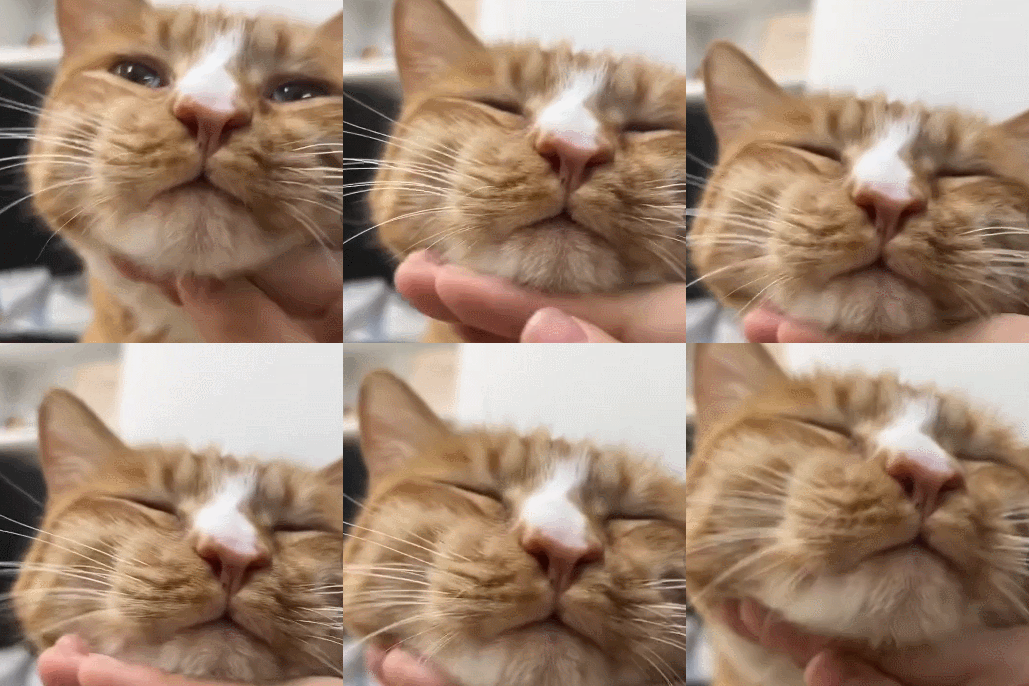
Switch Location: Whiskers
Effect: Mouth Lifts Up**Press a cat’s whiskers downward, and its little mouth suddenly tilts upward—why does this happen?In fact, a cat’s whiskers are highly sensitive tactile hairs. Their roots connect to deep, enlarged follicles embedded much deeper than normal fur. At the base, they contain a blood-filled sinus, which detects vibrations, allowing whiskers to sense the texture, pressure, and distance of objects. All these signals are converted into neural impulses and sent to the brain…Some people speculate that when you press a cat’s whiskers, you stimulate muscles near the whisker roots—especially the muscles pulling the corners of the mouth—causing the mouth to lift.Others believe it might trigger the cat’s “avoidance reflex,” meaning the cat raises its mouth because it feels uncomfortable and wants to pull away.
-
Switch Location: Ears
Effect: Automatic Dodging**Try approaching a cat’s ear with a single finger, and you’ll notice the ear instinctively moves out of the way—almost like it has a built-in “auto-avoidance system.”
One theory is that cats use their ears as vital tools for receiving information from their surroundings, so they instinctively avoid anything that may interfere with this function.Another possibility? The cat just doesn’t want you to touch its ears—just like how it pulls its paw away when you try to touch its feet. -
Switch Location: Below the Knee
Effect: Kicking Reflex**When a cat is completely relaxed and you tap the area right below its knee… hey! The leg kicks!Do cats really have a knee-jerk reflex too?Yes—this reflex occurs when tapping the tendon below the knee, triggering a rapid contraction of the lower leg muscles. Since cats have the same anatomical structures, they naturally display the same reflex.
-
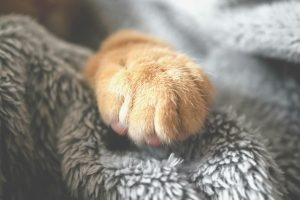
Switch Location: Base of the Paw Pads
Effect: “Flowering” Toes**Gently press or massage the base of a cat’s paw pads, and its claws will open up like a blooming flower~(Not all cats allow their paws to be touched!)Cats often spread their toes when stretching, grooming, or “kneading biscuits,” so some people speculate this reflex developed to help cats clean between their toes more easily.
-
Switch Location: Paw Pads
Effect: Nails Pop Out**Is this the built-in “nail-trimming switch” for cat owners?This effect is actually related to the structure of a cat’s claws. Cats normally retract their nails to reduce friction and noise when walking—useful for silently stalking prey.When you press the paw pad, it stretches the tendons, forcing the claws to extend from their hidden position.
-
Switch Location: Base of the Tail
Effect: Automatic Butt Lift**Many cat parents have noticed their cats acting a little… unreserved. A gentle tap on the backside, and their butt lifts sky-high!Behavior experts suggest the base of the tail contains many nerves, and tapping or rubbing the area causes mild discomfort—similar to a ticklish or slightly painful sensation.Light discomfort can actually feel pleasurable, like a good scratch. Some cats enjoy the feeling so much that they lift their butt in anticipation of more.
-
Switch Location: Around the Mouth
Effect: Kitten Ear Wiggle**When bottle-feeding orphaned kittens, people often notice their tiny ears wiggle adorably while they drink.This may be because their facial muscles aren’t fully developed yet. During nursing, kittens exhibit suckling and swallowing reflexes, and these movements can trigger nearby muscles, causing the ears to twitch rhythmically.Some kitten-care guides even list ear-wiggling as a helpful sign to confirm that bottle-fed kittens are successfully drinking.
-
Switch Location: Anywhere
Effect: Purring × N**The most important part of this “switch” isn’t where you touch—it’s who is touching.When you stroke a cat’s head, back, or belly, the cat may start to purr… and sometimes they begin purring even before you touch them!This may indicate that the cat enjoys its owner’s touch and values their presence.A 2017 study found that cats purr significantly more when their owners return after being away for a long time.So… this switch?It all depends on you.
However, because every cat comes with a different “factory setting,” the number of switches each kitty has can vary. As for whether your cat has any additional hidden switches, that’s something every cat parent has to discover on their own~So, what special switches does your cat have?