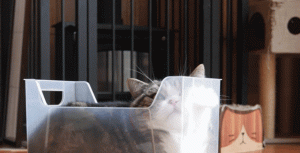
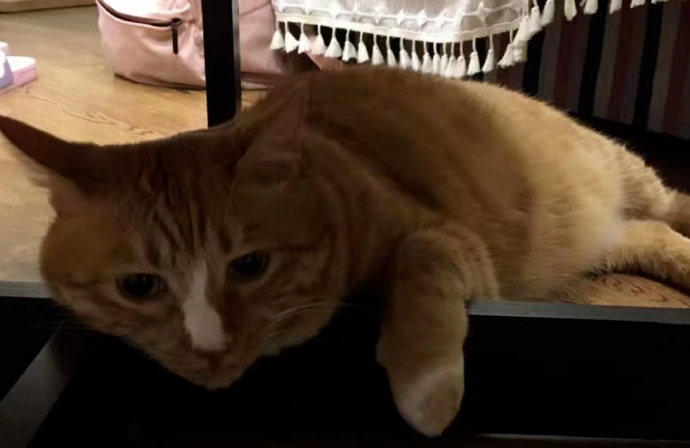
Recently, Ms. Yan, an employee at the Cat Research Institute, reported that since joining the organization, she had been scammed out of money by the director, Mr. Che (male, 7 years old in cat years). This incident also caused her significant emotional distress.Following the event, the Cat Research Institute conducted an interview with Ms. Yan to fully understand the situation and the sequence of events.If you, as a cat owner, have experienced a situation similar to Ms. Yan’s, beware — you might be falling victim to a cat PUA scheme!So, how do cats usually manipulate their owners?And if you find yourself being emotionally manipulated by your cat, how can you protect yourself?Let’s explore these questions together with Xiao Mo and find out how to deal with toxic cat behaviors~
-
How Do Cats Perform PUA?
PUA, originally a “pickup artist” technique, has been exploited by some toxic cats as a way to manipulate their owners for food, attention, and affection. Many humans fall for it without even realizing it.To achieve their goals, these cats often use a five-step PUA trap method:Step 1: Curiosity Trap.At first, the cat uses its 360° flawless cuteness and innocent, kitten-like behavior to present itself as an irresistible little creature, sparking your curiosity and attention.Step 2: Exploration Trap.As you gradually observe and interact, you notice that even the seemingly aloof cat has a timid and vulnerable side, triggering your protective and nurturing instincts.Step 3: Fascination & Infatuation.You become enchanted by the cat. Feeding, grooming, and cleaning litter become joyful, voluntary tasks. Your shopping cart during sales events like Double 11 or 618 is already filled with items for your cat.Meanwhile, the cat signals affection through behaviors — eating with you, sleeping nearby, or even waiting outside the bathroom door!Step 4: Destruction Trap.Eventually, you are fully hooked. The cat starts showing its true feline personality: alternating between sweet, affectionate behaviors and cold, disdainful attitudes, cycling between emotional manipulation and occasional tenderness.Step 5: Emotional Abuse.Finally, the cat reveals its true nature, exerting emotional abuse and psychological control. Small acts include persistent meowing for treats, while extreme cases can resemble aggressive behaviors (though rarely physically harmful).By this stage, the owner is deeply ensnared and struggling to break free.Such deep manipulation can overwhelm many cat parents!Since we now understand the typical PUA strategies of toxic cats, the question arises: how can owners avoid falling into these traps?

-
Practical Guide to Fighting Cat PUA
Although we aim to resist cat PUA, we must do so scientifically and effectively, so your cat cannot exploit weaknesses.Step 1: Build Confidence.First, develop confidence as a responsible cat parent.Ensure essentials are met — abundant food, stimulating environment — and discard unnecessary guilt.Scenario example:After a hard day working under the scorching sun, you worry about your cat at home lounging, eating, and enjoying the AC. But most adult house cats enjoy solitary life due to strong territorial instincts.Research insight:Cats spend about 70% of their day (15–16 hours) sleeping or resting. The remaining time is for playing, eating, and wandering indoors.Strategy:If you’ve provided sufficient food, water, and entertainment, don’t worry about them — focus on your own tasks. You can also install a camera to see your cat happily at home, instantly relieving any guilt.Step 2: Play Hard to Get.Sometimes a cat doesn’t seem to value you simply because it feels overly secure.Show a little cool detachment to encourage the cat to approach you on its own.Scenario example:When you come home, the cat eagerly greets you, rolls on the floor, and begs for attention. You feel instantly rewarded for a day of hard work.But just as you reach down to enjoy the moment, the cat sprints away.Many cats prefer the person who appears more indifferent, as cats need personal space.Strategy:When your cat rolls or seeks attention, don’t overreact or immediately pet its belly. Simply say hi softly, blink, or offer minimal acknowledgment. Sometimes, this will encourage the cat to approach you proactively.Step 3: Resist Manipulation.Cats manipulate through behavior, meowing, and even gaze, often persisting until they get what they want.Strengthen your resistance to excessive affection demands.Scenario example:In the early morning, your cat may jump on your bed, pawing, licking, nudging, or even pressing on your chest, forcing you to wake up. Cats are most energetic at dawn and dusk.Strategy:Before sleep, ensure the cat has food, clean litter, and playtime. If it wakes you early, pretend not to hear it, or use earplugs if necessary.Additional tactic:You can also adjust their schedule, letting them be more active during the day so they sleep more at night, reducing early-morning disruptions.Step 4: Education is Key.Many cats become bold because they are spoiled and overindulged, leading to destructive behavior like scratching furniture or biting during play.Scenario example:Your cat knocks over newly purchased items, causing damage.Research insight:Cats can associate human emotions with corresponding tones and expressions.When you appear happy, cats are more willing to stay close.When you are upset, they reduce positive behaviors.Strategy:During training or correcting misbehavior, act immediately and calmly. While cats may not consciously understand wrongdoing, your emotional cues help them recognize boundaries.Establish a subtle low-pressure environment, so the cat can perceive disapproval without fear.
Alright, that wraps up today’s Anti-Cat PUA guide~We hope all cat parents can take this as a lesson, draw broader insights, and enhance their ability to recognize and deal with toxic cat behaviors.