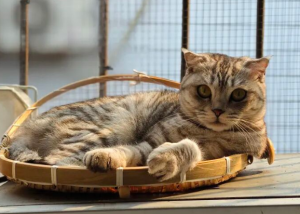
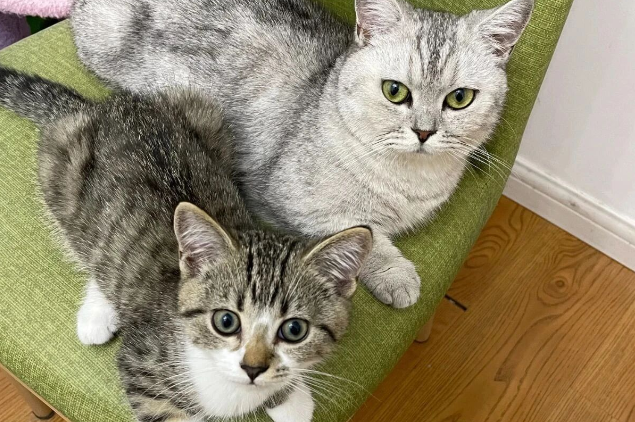
Owning a cat isn’t just an impulsive decision — it’s a 10-to-20-year commitment.Raising a cat scientifically not only improves your cat’s quality of life but also helps reduce the heartbreaking issue of pet abandonment caused by poor preparation.In my home, I live with two lovely cats: Tutu and Peiqi.Tutu is a short-legged silver shaded cat. I brought her home when she was just over two months old — now she’s already five.The other one, Peiqi, is actually Tutu’s daughter — a mix between a British Shorthair and an American Shorthair. I helped deliver her myself!She’s four years old now, and because she was always the most enthusiastic eater since kittenhood, we named her Peiqi.Today is Thursday, September 11, 2025. While Tutu’s dad was browsing a pet supplies website, he came across an interesting piece of pet science — and we thought it’d be fun to share it with you!Have you ever noticed that soft, jiggly flap of skin under your cat’s belly that sways gently when they walk?Many cat parents can’t help but laugh the first time they see it and say,“Wow, did my cat eat too well and grow a beer belly?”Hold on — don’t rush to sign your kitty up for a weight-loss plan just yet!That cute hanging belly actually has a scientific name — the Primordial Pouch.And guess what? It’s not a sign of obesity at all, but rather an evolutionary feature inherited from ancient wild cats — a built-in survival tool designed by nature itself.
-
What Is a Cat’s “Primordial Pouch”?
The primordial pouch is a loose flap of skin that runs along a cat’s belly, stretching from the abdomen down toward the hind legs. Inside, it contains a small amount of fat.This feature is an evolutionary trait left over from wild ancestors — not only domestic cats have it, but so do big cats like lions and tigers.The pouch usually becomes noticeable when a cat reaches around two years old, though not every cat has one. Its appearance varies depending on the breed and individual genetics.Both male and female cats — whether spayed or neutered — may have a visible primordial pouch. In fact, in certain cat shows, the pouch can even be part of the breed standard for judging!
-
The 3 Amazing Functions of the Primordial Pouch
That soft, wobbly belly flap isn’t just there for looks — it’s actually one of your cat’s hidden survival tools, serving three important purposes: A Built-In “Airbag” During Fights.A cat’s abdomen is one of its most vulnerable areas, housing many vital organs. During fights, cats often kick each other’s bellies with their hind legs.The primordial pouch acts like a natural cushion, absorbing impact and reducing the risk of injury. A “Portable Pantry” for Survival.In the wild, food isn’t always guaranteed. The pouch allows a cat’s belly to expand and store more food after a big meal.The small amount of fat inside also serves as backup energy storage for times when food is scarce — a clever adaptation passed down from their wild ancestors. A “Flexibility Booster” for Jumping and Running.Cats are natural hunters, known for their ability to leap, sprint, and pounce with precision.The loose skin of the pouch provides extra stretch and mobility, allowing the hind legs to extend freely without restriction.This makes every jump, twist, and chase smoother and more agile — a key advantage for any feline athlete.
-
How to Tell the Difference Between a Primordial Pouch and Real Fat
While the primordial pouch is completely normal, obesity in cats can lead to serious health issues such as diabetes, arthritis, cardiovascular disease, and even anesthetic risks.So, how can you tell whether your cat’s belly is a natural pouch — or a sign that your feline friend has gained a few too many treats?The Texture Test.Primordial Pouch: Soft, loose, and gently sways when the cat walks.Fat Belly: Firm and tight to the touch; looks rounded and doesn’t jiggle.The Shape Test.Healthy Body Shape: From above, you can see a defined waistline; from the side, the belly tucks slightly upward.Overweight Body Shape: The waistline disappears, and the belly looks round or barrel-shaped.The Rib Test.Gently feel along your cat’s rib cage:If you can feel the ribs under a thin layer of fat, your cat’s weight is likely healthy.If the ribs are buried under thick fat, your cat may be overweight.If you’re uncertain, don’t guess — it’s best to consult your veterinarian for a professional evaluation. They can perform a proper body condition assessment and help you determine a healthy diet and exercise plan.
That adorably wobbly flap of skin on your cat’s belly is most likely its primordial pouch!So next time you see your feline “patrolling” the house, proudly swaying that sacred piece of equipment, remember to look at them with a bit more admiration — because it’s not just irresistibly cute, it’s also a brilliant evolutionary masterpiece born from the intelligence of one of nature’s top predators.