Do You Know if Your Cat is a New World Cat or an Old World Cat?Have you ever wondered whether your cat is a “New World Cat” or an “Old World Cat”? According to some online sources, you can tell by the way your cat lies down, plays, or even how they bury their waste. People online are going wild with this classification, suggesting that strange kitten behavior is all because they come from either the “New World” or the “Old World”! But what does it really mean for a cat to be a “New World” or “Old World” cat? Is this classification even scientifically accurate? And what if your cat shows traits from both worlds—or none at all? Does that mean something’s wrong with your little furball?
-
New Cats or Old Cats? Check Out Your Cat’s Traits
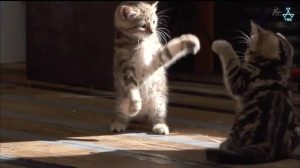
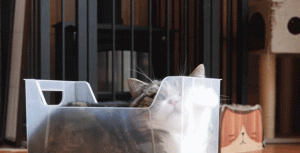
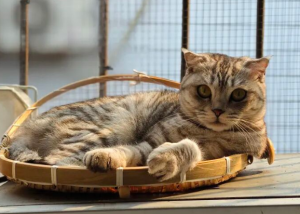
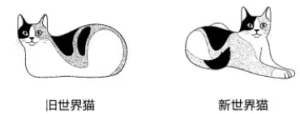
The popular online concept of “New World Cats” and “Old World Cats” is not a formal zoological classification. It originates from the work of Jackson Galaxy, a cat behaviorist, in his book Catify to Satisfy. Galaxy defined “Old World Cats” as felines native to Africa, Europe, and Asia, including house cats, servals, and wildcats. “New World Cats,” on the other hand, refer to wildcat species native to the Americas, such as jaguars and ocelots. Galaxy suggested that the ancestors of Old World Cats lived in open or semi-open environments, developing cautious, stealthy survival strategies. New World Cats, however, evolved in dense forests where they didn’t need to hide, leading to more outgoing and direct behaviors.Based on these traits, Galaxy created a “cat identification guide.” First, the lying posture: Galaxy observed that Old World Cats tend to tuck their paws neatly under their bodies, forming a small, square-shaped loaf—this is known as the “farmer tuck” pose. New World Cats, however, sprawl more freely, with their legs outstretched and paws reaching forward, relaxed and at ease. Their hunting and eating habits are also different. Old World Cats are more wild at heart—if they catch a bird, they may eat it raw without removing its feathers. New World Cats, however, patiently pluck off the feathers before eating.When it comes to playtime, especially with cat toys, Old World Cats prefer to observe and wait for the right moment to pounce, often striking with precision. New World Cats, on the other hand, are more laid-back, following the toy without much thought, simply batting at it with their paws.Now, let’s talk about litter box habits. Old World Cats instinctively bury their waste to mask their scent and avoid detection. New World Cats, however, often leave their waste exposed, marking their territory as they go. Galaxy jokingly remarked that if your cat is from the New World, you may find yourself scooping a lot more litter.Temperament and affection levels also differ. Old World Cats are more independent and aloof, preferring to keep their distance from humans. Cats that prefer to observe from afar and don’t like being petted are typically Old World types. New World Cats, in contrast, are bolder and more affectionate, seeking close interaction with humans and often relying on their owners more. Cats that lie on their backs in the middle of the road, demanding belly rubs and successfully “enslaving” their humans, are undeniably New World types.However, Galaxy clarified that these differences are not based on taxonomy. All domestic cats today descend from Old World Cats, but each cat may display different personality traits. Some may be more cautious and distant, resembling an “Old World” cat, while others are outgoing and clingy, acting more like a “New World” cat. These guidelines simply offer a fun, anthropomorphic way for cat owners to understand their pets’ behavior.
-
Where Did Domestic Cats Really Come From?
So, scientifically speaking, is there really such a thing as “Old World” and “New World” cats? In short, no. Let’s dive into the domestication and spread of the domestic cat. Archaeological and genetic studies show that the domestication of cats began around 10,000 years ago in the Near East, specifically in the Fertile Crescent. All modern domestic cats trace their ancestry to the Near Eastern wildcat. As agriculture developed, human-stored grains attracted mice, which in turn attracted wildcats. These wildcats began frequenting human settlements, and early farmers discovered that cats were excellent at controlling rodent populations. Over time, bolder wildcats started to tolerate human proximity, leading to the early stages of domestication.Once domesticated, cats spread from the Near East, either intentionally or accidentally, across the globe. In Cyprus, a site dating back around 9,500 years shows a wildcat buried with a human—less than 40 centimeters apart. This is one of the earliest pieces of evidence of cat domestication. Cyprus, being an island without native wildcats, suggests that cats were brought to the island by humans and were likely already being kept to control rodents.Later, ancient Egypt became a major hub for the spread of domestic cats. Around 2000 BCE, Egyptians began mass domesticating cats, worshiping them as sacred animals. Archaeological sites have uncovered numerous cat mummies. The next wave of cat spread occurred during the Roman Empire, when cats were brought along trade routes and military campaigns, reaching parts of Europe and even Viking settlements.As for China, during the Neolithic period, attempts were made to domesticate another species—the leopard cat. Bones from leopard cats have been found in archaeological sites in Henan and Shaanxi, indicating early attempts at cat domestication. However, these attempts were overshadowed when domestic cats from the West arrived via the Silk Road, quickly replacing leopard cats. Thus, like the rest of the world, China’s domestic cats also descend from the Near Eastern wildcat.Now, how did cats make their way to the “New World”—the Americas? Thanks to mice. During the Age of Exploration, European sailors often brought cats aboard ships to control the rodent populations. By the 17th century, domestic cats had made their way to the Americas aboard colonial ships, leaving their paw prints across South and North America.Strictly speaking, the Americas never had a separate domesticated cat population. The so-called “New World cats” are simply descendants of Old World cats, having been isolated for a few hundred years at most. There’s virtually no genetic difference between the two, and no new subspecies or species have formed. So, why do some people believe there are differences between New World and Old World cats? This stereotype likely stems from breeding practices. Over the past few centuries, humans have bred different cat breeds for aesthetic and companionship purposes, such as the Ragdoll and Maine Coon, which are known for being friendly and affectionate. In contrast, European and Asian breeds like the Siamese and tabby are often thought of as more active and intelligent. However, no matter the breed, all cats are genetically the same species—just like humans, who may differ in skin color and height but are all part of the same species.
-
Do “Old World” and “New World” Really Exist in the Animal Kingdom?
While domestic cats are all from the same world, the concept of “Old World” and “New World” animals is not a fabricated idea. A clear example exists in primates, where scientists have classified monkeys into two main groups: “Old World monkeys” from Africa and Asia, and “New World monkeys” from the Americas. Research suggests that the divergence of these groups occurred around 35 million years ago. Back then, Africa and South America were separated by a vast ocean. One branch of early primates stayed in Africa, evolving into the Old World monkeys we know today, such as baboons, macaques, and proboscis monkeys. Humans, as apes, share a common ancestor with these Old World monkeys.Another branch of primates floated across the ocean on natural rafts and made their way to South America—yes, you read that right. Geologic studies show that, during that time, sea levels were low, and ocean currents were favorable for such a journey. These ancient “mariners” reached their new continent, where they evolved into the New World monkeys. While Old World and New World monkeys share a common ancestor, they’ve been separated for millions of years, leading to significant differences in appearance, physiology, and behavior.
In Summary: The Biological Meaning Behind “New World” and “Old World” ClassificationsIn biological terms, the “New World” and “Old World” classifications typically reflect two situations: First, there are cases where ancient geographical isolation led to the evolution of sister groups, such as with New World monkeys and Old World monkeys. Second, there are species of different origins that, through adapting to similar ecological environments, underwent convergent evolution. In these cases, the terms “New World” and “Old World” are used for distinction, such as with the New World porcupines and Old World porcupines.As for domestic cats, they don’t belong to either of these categories (yes, that’s right, cats are from a whole different world). Instead of labeling them as “New World” or “Old World,” maybe it’s better to classify your cat using MBTI! It feels like a much more detailed system.