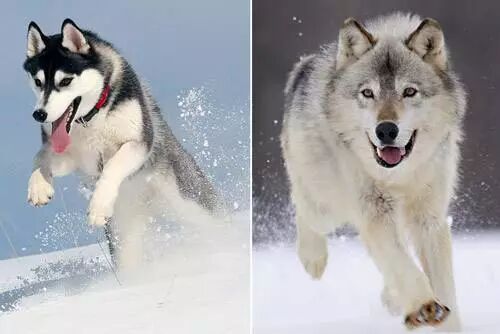
In the relationship between humans and all other animals, the bond with dogs is undoubtedly the most unique and cherished. However, how this relationship was formed, when it first began, and where it happened remains far from having a definitive answer.
-
The Moment That Changed History
A small group of ragged, primitive humans is moving through dense grass. This is the distant past, long before humans had dominion over the Earth. The environment of this tribe is incredibly harsh, and they are constantly living in fear of wild beasts lurking in the woods and shrubs, where danger is unknown and ever-present. They possess primitive bows and arrows, their bodies resemble our own in shape and size, but their movements and gazes are more animal-like. After a recent hunt that resulted in the loss of an experienced hunter to a tiger, the tribe decides to migrate to a different region on the plains. During the migration, they face an unexpected problem. In their original territory, every night as darkness fell, the tribe would gather around the campfire to sleep, and around them, there was always an animal of suspicious behavior, unlike other beasts — wolves. Whether attracted by the smell of roasted meat or for some other reason, no one paid much attention to them. Upon reaching their new campsite, the tribe realizes that without the wolves circling around them and barking at any approaching danger, they are unable to sleep peacefully throughout the night. After several exhausting nights, one day, they finally hear the familiar howl of a wolf from a distance. The group of primitive humans is a bit confused. In the past, whenever wolves got too close, they would scare them away with stones, but now they are uncertain whether to act the same way. The young tribe leader rises, and after a long silence, he makes a surprising decision — he cuts a piece of meat from their recent catch and throws it near the wolf. This moment forever changed both the wolf and humanity.This is an imagined description of the moment when dogs were born. Early humans, recognizing the protective role of wolves, began to feed and tame them. This explanation is based on the groundbreaking work of Konrad Lorenz, the founder of modern animal behavior studies and Nobel Prize laureate in Physiology or Medicine. In his 1949 book Man Meets Dog, Lorenz explained how wolves evolved into dogs. In a sense, when humans first engaged with wolves, dogs were born. Although it took many generations for the wolves to evolve into creatures with distinct temperaments and appearances, leading to the long partnership between dogs and humans that would last for tens of thousands of years. The birth of dogs is a significant moment in history. Dogs were the first animals to bond with humans, recognized as the first domesticated species long before other livestock. They are the only animals domesticated by humans even before agriculture emerged. Moreover, dogs share the closest relationship with us of all animals. This close relationship is mutual. For dogs, they owe their existence to humans. Without humans, there would be no dogs; it was humans who domesticated wolves and created dogs. For us, dogs play a rich and varied role in our lives. While most animals were domesticated by humans primarily for food resources, dogs are different. Initially, they were used for guarding and hunting, but as human society evolved, dogs became integral to transport, herding, search and rescue, and guiding the blind… No other animal has contributed to humanity in so many diverse ways.
-
The Story Told by the Dog Bones of Yin Xu
At the Institute of Archaeology, Chinese Academy of Social Sciences, Dr. Li Zhipeng, a researcher at the Center for Scientific Archaeology, led me to the animal archaeology sorting room. He retrieved a box of ancient dog bone specimens from storage, each bone categorized and placed in protective bags. “This set of bones is quite complete: the skull, jaw, ribs, limb bones, spine, and even the baculum are all intact, indicating this was a male dog,” Li Zhipeng explained, arranging most of the bones by their approximate position. The silent skeleton seemed to gaze back at us, as though it had many stories to tell. “These bones were unearthed from the Yin Xu ruins, over 3,000 years ago,” Li said.Yin Xu, located in Anyang, Henan Province, was the capital of the late Shang Dynasty. Discovered in the early 20th century, excavations led by archaeologists such as Li Ji confirmed the existence of the Shang dynasty, unearthed numerous oracle bone inscriptions, and treasures like the famous “Si Mu Ding,” a significant bronze vessel. This discovery marked one of the greatest milestones in modern Chinese archaeology.The dog bones found here exhibit characteristics that are indistinguishable from modern dogs, indicating that the people of the Shang Dynasty already had dogs much like today’s, though it is difficult to pinpoint a specific breed based on skeletal remains alone. Li Zhipeng explained that the context of the dog bones is crucial. If the bones were found scattered in a “hearth pit,” it would suggest they were the remnants of dogs consumed for meat. However, the complete dog skeleton here was found in a “waist pit” inside a human tomb. In Shang culture, it was common to bury dogs as part of funeral customs, particularly during the late Shang period. The “waist pit” is a small pit dug beneath the deceased’s waist, where a dog was deliberately placed to accompany the dead, reflecting the extraordinary relationship between the Shang people and dogs.Why did our ancestors bury dogs with the deceased? “In the late Shang period, dogs played roles as protectors and hunting assistants. The Shang people believed that animals, like humans, had spirits that persisted after death, and dogs were likely meant to continue guarding their masters in the afterlife,” Li Zhipeng explained. Unlike pigs, cattle, and sheep, which were typically buried with only parts of their bodies, dogs were interred whole, suggesting that their functional role in the afterlife was highly valued.The age and quantity of the dogs buried with the deceased also provide intriguing clues, suggesting that dog breeding and trade may have existed during the Shang period. Li Zhipeng’s identification of 84 dog skeletons at the Xiaomin Tun site in Yin Xu revealed that two-thirds of the dogs were under one year old. This suggests that the Shang people intentionally selected younger dogs for burial, as adult dogs were valuable for domestic purposes, and killing them would be wasteful. Interestingly, puppies under two months old, which had not yet been weaned, were spared from slaughter, revealing a sense of care for the animals.The sheer number of dogs used for burial in the late Shang period implies that a specialized dog-breeding industry may have existed. Evidence from oracle bone inscriptions also suggests that the Shang dynasty’s king received tribute in the form of hundreds of dogs, further supporting the idea of a large-scale dog breeding operation.
-
Humans Chose Dogs, and Dogs Chose Humans
Among all the wild animals in the ancient world, why did our ancestors first choose wolves? And why did wolves cooperate, eventually becoming the dogs that have accompanied humans to this day? Today’s dogs are our partners in various tasks, not just because they are smart. Monkeys are more intelligent than dogs, but humans still don’t use them for guarding, herding, or guiding the blind. Although monkeys have the physiological capacity to perform these tasks, they are an untamed species, making them hard to control effectively. Some monkeys, such as those trained in circuses, can follow human commands, but they are trained, not domesticated. The difference is that training occurs on an individual level, whereas domestication happens at the group level and involves breeding over generations to transform wild animals into stable, manageable pets.Lions and tigers are carnivores, but only wolves were domesticated by humans. According to biologist and anthropologist Jared Diamond, only a small number of wild animals are capable of being domesticated. Of the 148 species of large terrestrial herbivores capable of domestication across Eurasia, sub-Saharan Africa, the Americas, and Australia, only five were successfully domesticated: sheep, goats, cattle, pigs, and horses. Wolves are an exception. Dogs were domesticated as an exception to the rule, which raises the question: what made wolves special?Dr. Zhang Jinshuo, a senior engineer at the Institute of Zoology, Chinese Academy of Sciences, explains: “Among carnivores, dogs and cats are the most well-known. Dogs evolved later and have higher intelligence. Moreover, wolves’ social structure and cooperation are fundamental to their domestication. Wolves are pack animals, which is why they could live with humans and cooperate with them.” This social nature is crucial for domestication. Just like horses, cows, and sheep, wolves have a social structure that makes them easier for humans to manage. Cats, on the other hand, are solitary animals, making them an exception.

-
The Earliest Dogs in China
Even though the mechanisms of early interactions between wolves and humans have been clarified, there remains one direct and specific question that has yet to be answered: When and where were dogs first domesticated on Earth? To address this question, we must once again turn to archaeology for help. At the Institute of Archaeology at the Chinese Academy of Social Sciences, I met with Associate Researcher Li Zhipeng’s mentor, and renowned authority in animal archaeology, Yuan Jing. Yuan Jing was formerly the Director of the Center for Technological Archaeology at the Institute of Archaeology, and is currently the Director of the Institute for Technological Archaeology at Fudan University.“In 1998, I attended the 8th World Congress of the International Council of Archaeozoology at the University of Victoria in Canada. I gave a presentation on the current state of animal archaeology research in China. After the presentation, the first question I was asked was how many people in China were conducting research on animal archaeology. I replied that only three individuals were dedicating their entire time to this field. The session chair then laughed and said, ‘Your country has such a long history and such vast territory, yet you have only three animal archaeologists? That’s too few!’” Yuan Jing recalls.After returning from his studies at Chiba University in Japan, Yuan Jing focused his efforts on animal archaeology, introducing the theories and methods developed in Western archaeology in the late 20th century into China. The origin of domesticated animals is one of the most important topics in animal archaeology, and Yuan Jing led research on the origins of dogs in China. Interestingly, recent studies suggest that dogs may have originated in China. Yuan Jing showed me a piece of a dog’s lower jawbone, excavated from the South Zhuantou site in Xushui County, Hebei, in the 1980s. This jawbone, measuring more than 10 centimeters in length, belongs to a dog of great significance—it is the earliest dog discovered in China and also the first domesticated animal in the country, dating back around 10,000 years. Through advanced methods such as isotopic dating, archaeologists can determine the age of the site and its artifacts. The discovery places the jawbone in the early Neolithic period, a time when humans had begun making polished stone tools, pottery, and rudimentary dwellings, although they still relied mainly on hunting and gathering rather than agriculture.This jawbone shows that humans had already begun domesticating dogs at that time. However, unlike the complete dog skeletons found in royal tombs from the Shang Dynasty, the South Zhuantou site yielded only scattered bone fragments, with no written records from the prehistoric period to verify that these were indeed the “dogs” we recognize today. How can we be sure that this animal was a dog, and how do we know it was domesticated and became a companion to humans during the Neolithic period? Yuan Jing explains that the methodology of animal archaeology allows us to make confident conclusions. The size and shape of the bones themselves provide key insights:“First, the length of the upper and lower jaw cheek teeth rows, and the length of the premolar rows, were all smaller than the corresponding measurements in modern wolf specimens. Second, the bottom edge of the horizontal ramus of the right mandible has a distinct curve, while the horizontal ramus of a wolf’s jaw is straight. Additionally, the arrangement of the premolars is much tighter, unlike the sparse arrangement in wolves.”These two points confirm that the animal was a dog, not a wolf. Indirect evidence also supports this conclusion. For instance, at the South Zhuantou site, the minimum number of domestic dogs was three, making up about 9% of all mammal remains found—consistent with proportions found at other Neolithic sites. Furthermore, there are similarities with dog remains found at the Jiahu site, which dates back approximately 9,000 years. These findings suggest that, at least in the early Neolithic period (around 10,000 years ago), primitive humans living in northern China had domesticated dogs.Archaeology provides tangible evidence for historical events, but it also has limitations. The conclusion we have reached is that dogs existed in China at least 10,000 years ago. However, we still haven’t determined the exact date of their origin in China, and we cannot yet pinpoint the worldwide origin of dogs, as earlier dog bones dating back to 11,000 years ago have been found in Israel. “The jawbone of the domestic dog from the South Zhuantou site is noticeably shorter compared to that of a wolf, and such a significant change requires time. So we can be sure that the domestication of dogs in China predates 10,000 years. The practice of dog domestication in early China wasn’t limited to just the South Zhuantou site. But more fossil discoveries are needed, and those are often rare,” says Yuan Jing.Due to limitations in the available materials, archaeological conclusions can only reach this point for now. Meanwhile, biologists, armed with molecular genetics, have been trying a completely different approach to explore the origins of dogs, believing they can transcend the limitations of ancient materials.
-
Secrets Revealed by DNA
In 1953, the discovery of the double helix structure of DNA unlocked the secrets of heredity, marking a new era in biology. Since the latter half of the 20th century, genetics has advanced rapidly, leading to the explanation of many phenomena that had long remained mysteries. Regarding dogs, scientists have also used genetic evidence to clear up many misconceptions. Darwin and Konrad Lorenz once believed that dogs had multiple ancestors, including gray wolves, wild dogs, and jackals. However, current scientific consensus, based on DNA research, has concluded that all domestic dogs—whether they are the towering Great Danes weighing over 100 kilograms, or the tiny teacup dogs weighing only a few hundred grams—are descendants of the gray wolf and not related to other canid species.“We can use today’s dogs to understand the origin of dogs from tens of thousands of years ago,” explained Wang Guodong, a researcher at the Kunming Institute of Zoology, Chinese Academy of Sciences. Wang’s team, led by academician Zhang Yaping, is one of the most active research groups globally investigating the origins of domestic dogs. In 2002, Zhang Yaping, in collaboration with Swedish scientist Peter Savolainen, analyzed mitochondrial DNA fragments from 654 dogs and 38 wolves across different regions, concluding that domestic dogs originated in southern East Asia.How does the DNA of modern dogs reveal the past? DNA replication is highly accurate from generation to generation, but errors occasionally occur, and these mistakes are passed down. This characteristic provides scientists with a brilliant way to analyze the genetic information of organisms. A simple analogy can illustrate this mechanism. Imagine a classroom where students copy each other’s homework. Initially, only Xiaoming has completed the homework, which represents the genetic information of an ancestral species. Xiaoming then shares his homework with other students, just like the genetic process of inheritance. Copying homework is similar to genetic replication—a process of gradual divergence. Xiaoming gives his homework to Xiaowang and Xiaoli, and each of them shares their own versions with other students. Mistakes inevitably occur during copying, much like errors in DNA replication. These errors are specific and passed on, and subsequent copies will contain the same mistakes. However, Xiaowang and Xiaoli will make different errors, which allows the teacher to trace the homework to its origin and understand the sequence of events.Molecular geneticists are like this teacher: by comparing the genetic information of modern organisms—especially DNA replication errors—they can determine the evolutionary relationships between species. Because DNA replication errors occur at a relatively stable rate, scientists can also estimate the specific time when one species diverged from another. The study of dog origins through molecular genetics works in much the same way. The more samples collected, the larger the data set, and the more accurate the results. Wang Guodong elaborated:“Our sample size has steadily increased, and the scope of sequencing has expanded. In 2002, we analyzed mitochondrial DNA fragments, in 2009, we sequenced the entire mitochondrial DNA, and later included Y-chromosome analysis. By 2016, we had sequenced and analyzed the entire genome. This progress has been driven by advancements in sequencing technology and mathematical analysis methods.”Over the past decade, their research has produced several influential papers published in prestigious journals like Science and Nature. Wang Guodong succinctly summarized the conclusions of his team regarding the origin of dogs: domestic dogs originated in southern East Asia around 33,000 years ago. As for the specific region of “southern East Asia,” Wang explained:“It’s still not possible to pinpoint the exact area. The Yangtze River basin, the Pearl River basin, and even Southeast Asia are all possibilities.”Other international research teams have proposed alternative conclusions, suggesting that dogs originated in Europe or the Middle East, but Wang Guodong believes these studies have not posed a real challenge to their findings. “Some studies that differ from our conclusion are based on different samples. Their samples were incomplete, leading to partial conclusions. Some teams didn’t include samples from domestic dogs in southern East Asia, which is precisely where we found the closest relatives of the dog ancestors.”
-
The Journey Has Just Begun
Since archaeology itself cannot easily determine the exact origin of dogs based on empirical materials, how does Yuan Jing question the results of DNA research? His argument is straightforward: evidence from animal archaeology suggests that in China, dogs were most likely first domesticated in the northern regions, rather than the south. Therefore, the conclusion that dogs originated in southern East Asia should be questioned.“There is a lot of evidence supporting the idea that dogs first originated in the north. Fossils of gray wolves from the Pleistocene era are predominantly found in northern China. In contrast, in the southern region, several sites around 10,000 years old, such as the Shangshan site in Pujiang County, Zhejiang, and the Bailian Cave site in Liuzhou, have yielded animal remains, but no canid fossils. This suggests that the south may not have been suitable for the initial domestication of wolves,” Yuan explained.The discovery of other domesticated animal remains and cultural factors also provide supporting evidence. “Of the ‘six domestic animals,’ aside from the chicken, which may have spread northward from Southwest China through cultural exchanges, the other five—dogs, pigs, cattle, sheep, and horses—were all first discovered in northern China, north of the Yangtze River. Northern cultures have consistently been more advanced, with higher population densities, making it more likely that dog domestication occurred there first.”When discussing the two different approaches—archaeology and genetics—Yuan argued, “Animal archaeology provides empirical evidence through scientific excavation and research, which should be persuasive.” On the other hand, Wang Guodong, the molecular geneticist, emphasized that over more than a decade, their DNA sequencing samples have expanded, and their analysis methods have improved. Their conclusion remains firm: domestic dogs originated in southern East Asia. They are confident in their findings.Regarding the question of whether dogs originated in northern or southern China, it seems that archaeology and molecular biology have reached an impasse. One approach draws directly from tangible, ancient artifacts, while the other uses molecular genetics, which has proven effective in many areas. These two methods have reached their own conclusions. Can they possibly complement each other rather than working separately? If DNA could be extracted and analyzed from ancient samples, wouldn’t it merge the advantages of both archaeology and molecular genetics?In fact, this idea has already become a reality and plays a crucial role in the study of human origins. This is the field of ancient DNA research. This method presents a greater challenge to scientists because extracting DNA from ancient specimens is far more difficult. Ancient specimens have been buried underground for thousands of years, and enzymes secreted by bacteria in the soil, background radiation, and moisture in the environment all contribute to the degradation of DNA. The DNA that can be extracted from ancient remains is typically fragmented, ranging from just a few dozen to a few hundred nucleotides in length, while the DNA from modern specimens consists of long chains containing billions of nucleotides. The challenge of analyzing ancient DNA is immense.“Until now, our research has not used ancient dog samples, but ancient DNA analysis is definitely something we will pursue in the future. It’s a growing trend in international research,” Wang Guodong stated.As mentioned earlier, the team led by Laurent Frantz at the University of Cambridge concluded that dogs were domesticated in both Europe and Asia, but European dogs were later replaced by their Asian counterparts. This conclusion was reached through the full genomic analysis of a 4,800-year-old ancient dog skeleton discovered in Ireland. It is only because of the comparison between ancient and modern samples’ DNA that scientists have been able to map out a more detailed evolutionary path for dogs.Archaeologists are also eagerly anticipating ancient DNA research. Dr. Zhao Xin at the Institute of Archaeology, Chinese Academy of Social Sciences, has already started working on ancient DNA research. However, as she mentioned, this work is still in its early stages, and new conclusions about the origins of domesticated animals will take time to develop. The question of dog origins, seemingly straightforward, is still shrouded in many details. The key to unlocking the secrets of dog origins lies in interdisciplinary collaboration.This research may ultimately center in China, which has a significant advantage in this field due to its vast and rich material resources. “We have the richest samples of modern specimens. The often-overlooked Chinese rural dog (the ‘native dog’) has retained the most extensive genetic information because it hasn’t been artificially bred. Western research teams find it more difficult to obtain samples of Chinese rural dogs than we do obtaining purebred dogs from Europe,” Wang concluded.
Leading figures in Chinese animal archaeology, such as Dr. Yuan Jing and Dr. Zhang Yaping, along with molecular biologists, have already started collaborating and are in discussions about the details of their joint research. Both sides are excited about the prospects of this collaboration. As Dr. Yuan Jing puts it, the study of dog origins has “only just begun.”