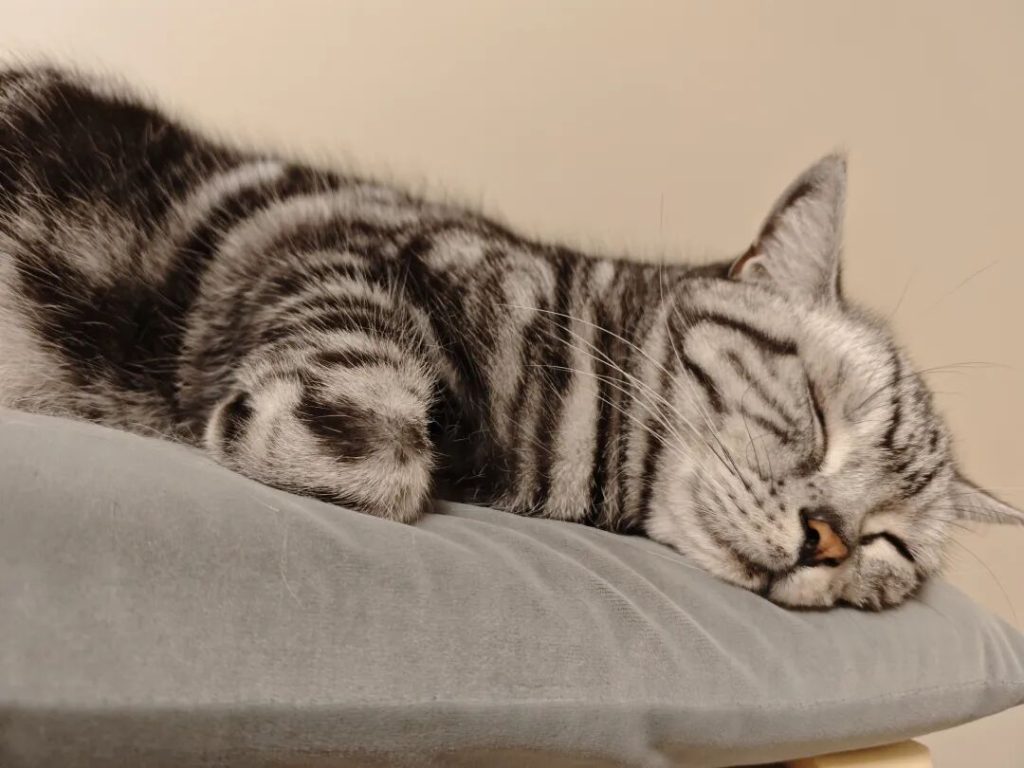
“Why is my cat constantly purring? Could it be a respiratory problem?”“Why does this cat purr so loudly?”“Is it really okay?”Yes—it’s perfectly normal!Cats purr for many reasons, and it’s completely natural for their purring to vary in volume and intensity. Some cats purr softly, others loudly—but both are normal behaviors.
-
How Do Cats Produce Their Purring?
A cat’s purring is an involuntary, instinctive response.When a cat breathes, the brain sends signals to the throat muscles, causing the vocal cords to vibrate at around 25 times per second, producing the distinctive “purr” sound.Some say cats purr because they are comfortable. Others say they purr because they are unwell.No need to overthink it—cats’ thoughts are simple.Usually, when you pet a cat and it purrs, it’s a sign of comfort and contentment.
-
Why Do Cats Purr When They’re Uncomfortable?
A cat’s purring frequency ranges from 20 to 140 Hz, which is close to the sound frequencies known to promote wound healing and bone growth.Therefore, when an injured or sick cat purrs, it may actually be helping itself recover.
-
Purring as a Communication Tool Between Mother Cats and Kittens
Kittens are born blind and deaf, and don’t develop vision and hearing until about ten days old.During this period, a mother cat’s purring serves as a signal of safety and a guide to nursing.Purring also releases endorphins that calm and soothe, strengthening the bond between mother and kittens.Additionally, this low-frequency communication has evolutionary benefits, helping cats avoid predators.
-
Is Every Cat’s Purr Unique?
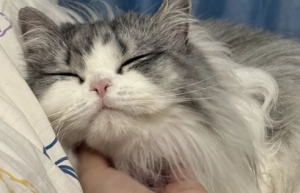
Yes! While all cat purrs fall within the typical low-frequency range, each cat’s purr is unique in tone, volume, and rhythm—just like human voices.Some purrs are deep and engine-like, while others are soft and like a tiny motor.
-
When Do Cats Stop Purring?
Cats stop purring in situations such as extreme fear, preparing to attack, or deep sleep.Similarly, if a cat is seriously ill or weak beyond its self-soothing limits, it may also stop purring.In other words, the presence of a purr usually reflects that the cat is relaxed or slightly uncomfortable, but the specific context needs to be interpreted by the owner.
Although there is currently no scientific evidence that a cat’s purring has healing effects on humans…I personally believe that a cat’s purr has an incredibly powerful therapeutic effect.It can soothe unhappiness, lift your spirits, and mend a broken heart.In my eyes, cats are truly miracle healers.