Today, let’s talk about a cat’s whiskers! Don’t underestimate them—they’re not just there for looks; they actually have many important functions! Let’s dive into some of the little secrets behind a cat’s whiskers and see how many of them you already knew.The true purpose of a cat’s whiskers is… On Halloween night, when you dress up as Catwoman, have you ever wondered why the whiskers you’ve drawn on your face are such an essential part of your costume? Well, for real cats, their whiskers are more than just decoration—they are crucial tools! They help cats explore the world around them and act as indicators of their emotions. Kittens can’t live without them!
-
Whiskers Are Extremely Sensitive
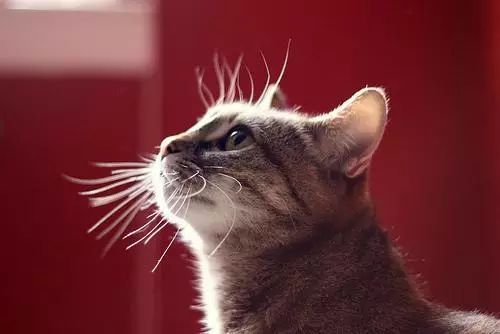
Unlike regular fur, a cat’s whiskers are deeply embedded in the skin, surrounded by nerves and blood vessels, making them incredibly sensitive. So sensitive, in fact, that they can detect even the slightest changes in air currents. That’s why even the slightest touch or brushing of a cat’s whiskers, even by well-meaning cat owners, can make them uncomfortable or even in pain. This is also why cats don’t like narrow food bowls with high edges—having their whiskers pressed down while eating is super annoying!
-
Whiskers Aren’t Just on the Face!
Most cats have 8-12 whiskers on each side of their nose, but that’s not all! Cats also have whiskers near their eyes, on their cheeks, and even along the lower part of their front legs.
-
Can They Fit Through That? The Whiskers Decide!
The whiskers near a cat’s nose are about the same width as their body. This is crucial because, for cats, if an opening isn’t as wide as their whiskers, it’s pretty much a “no-go” zone. Some people believe that if a cat gains weight, their whiskers grow longer. Any brave cat owners willing to test that theory on their little chubby furball?

-
Whiskers Are Also Tools for Catching Prey!
Cats are farsighted creatures—they can spot even the tiniest movement in the distance, but they struggle to see things up close. That’s where their whiskers come in! Whiskers help cats track the size and movements of their prey. Without whiskers, they probably wouldn’t even be able to tell if they were biting into a real mouse or a toy mouse!
-
Whiskers Can Tell You How They’re Feeling
Wondering how your cat is feeling today? Just check their whiskers! If their whiskers are relaxed and spread out to the sides, your cat is calm. If their whiskers are pointing forward, your cat is likely excited or focused—maybe they’ve spotted something interesting outside. If the whiskers are pressed tightly against their cheeks… well, back off! Your cat is probably scared or angry, and things could get messy if you get too close. Of course, combining their whisker positions with their body language gives you a clearer picture of their mood.
-
Never, Ever, Ever Cut a Cat’s Whiskers!
It’s completely natural for a cat’s whiskers to fall out, but never, ever, EVER cut them! Cats who have their whiskers trimmed lose their sense of spatial awareness and might even act disoriented. Their whiskers are their primary tool for navigating the world. Imagine if someone blindfolded you for weeks—how would you know where you’re going? You’d probably get lost too, right?
-
Never, Ever, Ever Cut a Cat’s Whiskers!
It’s completely natural for a cat’s whiskers to fall out, but never, ever, EVER cut them! Cats who have their whiskers trimmed lose their sense of spatial awareness and might even act disoriented. Their whiskers are their primary tool for navigating the world. Imagine if someone blindfolded you for weeks—how would you know where you’re going? You’d probably get lost too, right?
In the end, the true secret behind a cat’s whiskers is that they successfully cover up… the fact that their face is a bit on the large side!