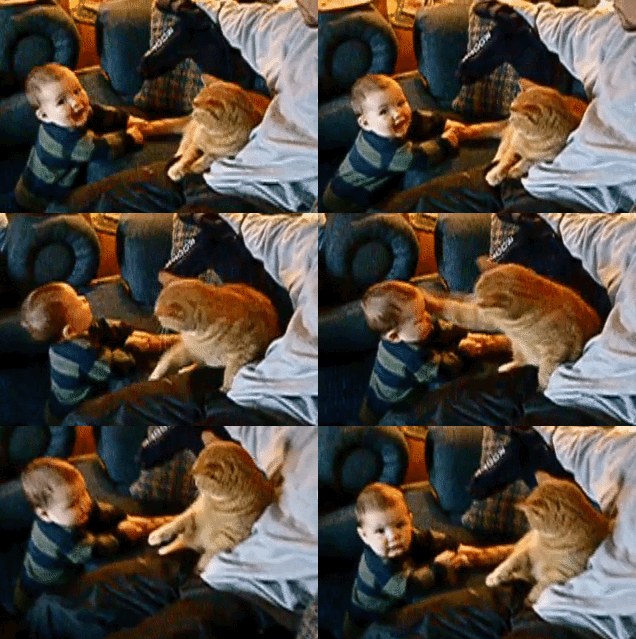
Cats are often described as creatures that don’t care about you, whether things are going well or badly. By this logic, kittens should be indifferent to humans. But here’s the twist! Many people have noticed that cats can actually get jealous when they feel ignored or treated differently.For example, they might attack other cats (or even dogs!) that are getting affection from their human “slaves.” Or, they could even take issue with a human baby.Some cats have been known to react with hostility toward newcomers—anything from cold shoulders to hissing, or even going on a hunger strike as a form of protest. Does this mean that cats aren’t as cold-hearted and indifferent as we often think? Could it be that they care about our affection for other creatures? Are they actually invested in our relationships with others?!When you stop and think about it, it’s a little heartwarming, even a bit exciting, isn’t it? But wait—can cats really feel jealousy?
-
Jealousy is Too Complex, Little Kittens Might Not “Get It”
From a human perspective, jealousy is a complex emotion. It involves feelings like anxiety, fear, sadness, suspicion, shame, guilt, depression, disgust, hostility, resentment, and even a desire for revenge. Jealousy tends to arise when we feel competitive with others—whether it’s feeling envious of the success of someone else, or a weaker person being jealous of someone more powerful. Sometimes, even hearing about someone else’s happiness can trigger jealousy.However, cats don’t experience jealousy in such a complicated way. They don’t care if the neighbor’s cat gets a fancy $30 can of food while they only get a $15 discount version. Experts believe that cats don’t have the same kind of jealousy humans experience. But, they do exhibit behaviors that can resemble jealousy.
-
Is Something That Belongs to Them Being Taken? Yes, Cats Can Get Jealous
In many cases, jealousy arises from competition. Specifically, when a cat feels that its territory is being invaded or its belongings are being taken away. These “belongings” include: their home (whether it’s a big room or a small bed), their food and utensils, toys, litter boxes, and their human caretakers. Anything that a cat deems “theirs” can trigger jealousy. In fact, even small intrusions, like someone moving a table the cat has rubbed against, can cause them stress and unhappiness.
-
What Situations Are More Likely to Trigger Cat Jealousy?
Jealousy in cats often arises from unexpected intrusions, such as:A new cat joining the household (the biggest factor).A human baby.The owner’s boyfriend/girlfriend.These newcomers all share one trait: they suddenly appear and take up a significant portion of the cat’s resources, making the resident cat feel displaced.

-
What Does Jealousy in Cats Look Like?
When cats get jealous, they may exhibit behaviors like:Yelling, threatening, or even attacking.Refusing to eat as a form of protest, or getting sick from the stress.Destroying other belongings.Abnormal bathroom habits (litter box problems).However, these actions are not typically done out of revenge. More often, they’re a way for the cat to release built-up emotions, mark their territory excessively, or express distress.
-
Why Do Some Cats Get Jealous and Others Don’t?
Some cats are simply more “sensitive” and will feel upset if you cuddle with another pet. But others couldn’t care less, and are even happy to share all their resources (including you) with others. So, why the difference?Cats that haven’t been properly socialized or were raised as “only child” kittens, especially those that left their mother early, are more prone to jealousy.Cats that are particularly clingy and were raised with humans, where resources were provided by humans, are more likely to get jealous.Cats that are more territorial or sensitive to changes in their environment may have a heightened sense of competition.If a cat is already stressed (feeling cramped, hungry, or ignored), they’re more likely to get angry.
-
Jealousy Isn’t Good, Don’t Let It Grow
When jealousy arises in cats, it’s bad for everyone involved—your cat, the object of the jealousy, and even yourself. Over time, unchecked jealousy can lead to an uneasy home environment. So, what’s the best way to handle it?Step 1: Don’t Drop Surprises on Them.Whether it’s a new cat, a newborn baby, or a new roommate, don’t just spring them on your cat. Start by bringing home something that carries their scent and let your cat get used to it. Gradually introduce them, especially if there’s a baby involved.Step 2: Provide Enough Resources.If your cat feels its resources are being threatened—like food, litter boxes, or even sleeping spots—it will feel like a personal loss. So, make sure you’re offering plenty of resources, and consider giving even more during the transition period.Step 3: Spend More Time with Your Cat.The easiest way to reduce jealousy is by giving your cat more attention. Extra attention can go a long way in preventing unwanted behaviors. Play with your cat, pet them more, and talk to them regularly.
Perhaps, in a cat’s mind, what they value more isn’t “love” but “possession” or “a sense of presence.” For a seemingly aloof cat with loose social connections, this might already be a form of deep affection. Don’t let it go to waste!Has your cat ever shown jealousy-like behavior?