Most of a cat’s day is spent napping or sleeping, and if you have a calm, easy-going cat, those lazy moments are even more frequent. This behavior is actually perfect for urban living, especially for introverted “homebodies.” Two similar creatures, a human and their cat, can find comfort in each other’s presence on a sunny afternoon, recharging together for the unknown challenges of tomorrow.My cat is a quiet British Shorthair with a golden gradient coat. Aside from the occasional burst of energy, most of the time, it’s a peaceful existence where we don’t disturb each other. So much so that I often overlook playing with it or don’t feel any clear obligation to interact. I do my own thing, and it does its own thing. Sometimes, when I finally have a break, I can’t resist teasing it while it naps; other times, it might nudge me, but I don’t have the time to respond. Although we’re in the same room, there’s an underlying sense of missed connection, a time displacement. One evening, I lay in bed watching it carefully lick its fur. It was so adorable, yet I often find myself refusing to engage with it, almost as if I’ve lost the joy of having a cat. This realization led me to study its instinctual needs more closely, and that’s how this article came to be.
-
Misunderstanding and Neglect
Cats are crepuscular animals (active during dawn and dusk), and the rest of the time they take short naps (about 15-30 minutes each) to restore their energy. They spend about 12-16 hours of their day napping or sleeping, a habit that comes from the instinct of their wild ancestors to conserve energy. When they wake up, they start hunting or foraging, repeating this cycle throughout the day.It’s often said online that cats are aloof and don’t want to interact with people, and this is partly true. Cats live according to their biological instincts, with their hunting and self-protection needs keeping them alert and independent. Unfortunately, humans often disrupt their natural rhythm, not realizing that cats won’t adjust to your schedule. Instead, they only expect a response from you when they need you. Many people think that cats are easier to care for than dogs—they don’t tear up the house or need walks, just food and occasional play. This sounds like a great deal for busy people who only have time to play with their cat in the evenings, leaving the rest of the day for them to nap and play by themselves. This is the reality for most people in urban settings with cats.However, feline behavior experts have found that nearly 40% of house cats exhibit signs of anxiety, often caused by excess energy and unmet social needs. This has made me reconsider if the way we care for cats needs to change. I also researched some common signs of anxiety in cats, and the one that always puzzled me was when my cat chews on plastic bags. While other symptoms aren’t as evident, it still made me realize the importance of addressing my cat’s need for more interaction. Beyond anxiety, lack of play can also lead to obesity—being confined to a small space every day, where their energy expenditure doesn’t match their intake. Obesity in cats has become a noticeable but often ignored issue among pet owners. What kind of environment and care methods benefit a cat’s growth and well-being? This is something we need to explore further. How much should you play with your cat each day? Could there be a strong need for interaction hiding beneath their cool exterior? How can we adjust to meet our cats’ needs? These are all questions we need to observe and answer by getting to know our cats better and applying scientific methods to improve our interactions, making our time together healthier and more enriching.
-
Scientific Recommendations
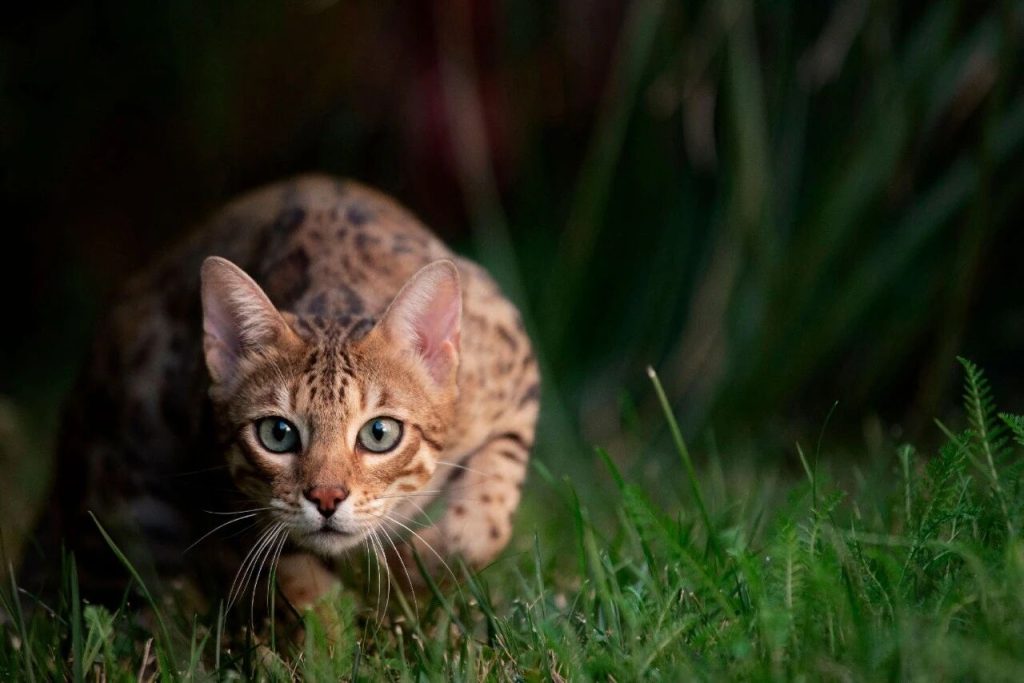
Certain scientific theories provide significant guidance, such as hunting simulation and environmental enrichment, which help deepen our understanding of cats as a species.Hunting simulation: In the wild, a wildcat (like a leopard cat) needs to perform 60-80 hunting movements daily, each lasting 15-30 seconds. This pattern of short, high-frequency movement is deeply ingrained in domestic cats’ genes. Even though modern house cats don’t need to hunt, they still retain “pretend hunting” behaviors. A “Feline Welfare Standards” guideline indicates that cats need to complete more than 15 successful hunting simulations every 24 hours. This means that owners should break up playtime into 5-7 short sessions, each with a complete “hunt-capture-eat” sequence. Once the cat successfully catches a toy mouse, giving them a treat immediately can best satisfy their psychological needs. If you’ve been playing with your cat casually, it might be worth trying this more structured approach.Neurobehavioral studies show that a cat’s attention span is only 8-12 minutes, so fragmented, short interactions are more effective. Play sessions with a clear strategy and goal-oriented actions work better and also make the experience more engaging for the cat.Besides actively interacting with your cat, improving the environment is also crucial, especially for pet owners with busy schedules who can’t always play. Environmental enrichment is a scientific concept and practice aimed at improving a pet’s living environment and quality of life. In simple terms, it’s about adding complexity and stimulation to the pet’s space to meet their natural instincts and behavior needs, enhancing their physical, psychological, and social well-being. Enrichment needs a systematic approach. Adding vertical spaces (cat trees, hammocks), sensory stimulation (catnip, bird videos, different types of toys), and food-exploration games (food-dispensing balls, sniffing mats) can effectively meet play and stimulation needs. An ideal home environment should allow cats to fulfill about 70% of their daily activity through independent exploration. This enrichment process should begin when the cat is young, allowing kittens to experience the world and develop adaptability skills.
-
Play Strategies
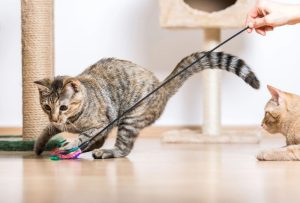
Choosing the right interactive tools directly affects the quality of the interaction. Wand toys activate the hunting instinct in vertical spaces, laser pointers are great for horizontal chasing, and automatic toys are perfect for when you’re busy and need a supplemental workout for your cat. A 2019 comparison study at the University of Zurich showed that cats’ serotonin levels were 32% higher when using a combination of three or more different types of toys compared to using a single type of toy.Here are some effective interaction strategies I’ve summarized:Wand toys to simulate prey movement: Move the toy quickly and occasionally stop to mimic a mouse’s escape pattern. Avoid just “drawing circles” as this is a lazy human trick.Frequent toy variation: Keep the toy new and exciting. My cat still loves playing with a simple string.Food hiding games: Hide treats in boxes, cat trees, or under blankets to encourage the cat to use its sense of smell to find them. Alternatively, place treats on high surfaces so the cat has to jump to reach them.Ball or mouse chasing: Stimulate the hunting instinct by sliding the ball quickly across the floor to trigger the cat’s pouncing reflex. Or hide a ball in a box for them to find.Hide and seek: Hide in a corner of the room and peek at your cat. It will immediately go on alert, and you can play “cat and mouse.”
The purpose of writing this article is to gain a correct understanding: which type of interaction better suits a cat’s nature—structured, social play or free-range, spontaneous play? Over time, I’ve come to see playing with my cat as a two-way interaction. It’s not just me actively engaging with it; it’s also a process of relaxation for me. Every time it nudges me, it feels like a reminder: “Work isn’t everything.”