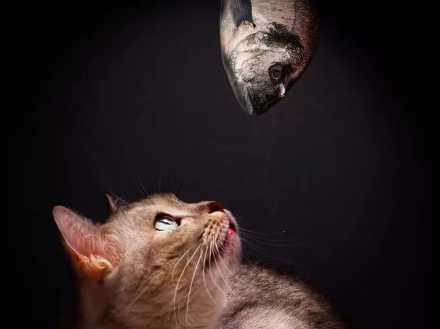
The idea that “cats love eating fish” has long been accepted as common sense. But do our feline companions actually love fish as much as humans imagine? Most of us grew up watching Tom and Jerry, which planted the belief that cats and mice are destined to be mortal enemies. Yet when we revisit the show as adults, Tom and Jerry—who seemed to battle endlessly—actually look more like inseparable best friends.As society evolved, the old mindset of keeping cats as “mouse-catching investments”—the belief that “a good cat is one that catches mice”—has shifted into a modern pet-parenting culture. It’s the era of “cats eat fish, dogs eat meat, and Ultraman fights tiny monsters,” where cats are pampered like little masters of the household.But here’s the twist: the ancestors of today’s house cats mostly came from desert regions. Fish? They rarely even encountered large bodies of water, let alone swam in them.
-
Why do so many people believe that cats love eating fish?
A popular explanation online goes like this: cats cannot synthesize taurine on their own. Without enough taurine, they can develop retinal degeneration, which may eventually lead to blindness. To avoid becoming a “blind cat stumbling upon a dead mouse,” cats must consume adequate taurine through their diet. Fish, conveniently, contain high levels of taurine, making them an efficient nutritional source for maintaining sharp vision.In our previous article about vegan cat food, we mentioned that animal-based ingredients are the primary source of taurine for cats, and marine animals contain even more of it. But when it comes to what cats naturally hunt, researchers have actually conducted dedicated studies.To understand the impact of domestic cats on wildlife, scientists surveyed pet owners about the prey their cats brought home. The results were published in Mammal Review in 2003. Here’s what they found: 69% of the prey were mammals, 24% birds, 4% amphibians, 1% reptiles, with the rest being fish and invertebrates. Among mammals, rodents were dominant—accounting for about two-thirds, or 44.3% of all prey. Younger and lighter cats also tended to bring home more birds than older, heavier cats.In other words, fish are far from a cat’s top choice. And cats don’t eat fish because they “know” fish contain taurine. What attracts them is the strong fishy smell. Protein metabolism produces ammonia, which smells bad. Fish release ammonia directly through their skin into the water, without any conversion process, making their flesh smell much stronger than that of land animals (humans release ammonia through urine).This intense odor tells a cat one thing: “There’s meat here!” And the stronger the smell, the easier it is for cats to detect it from a distance.

-
So why were we led to believe that cats love eating fish?
One widely shared theory traces back to ancient Egypt. Cats originated in Africa and were domesticated by Egyptians. The Nile—Egypt’s lifeline—was full of fishermen. These fishermen often brought cats onto their boats to control rats. When there were no rats to catch, fishermen fed the cats leftover fish scraps or small shrimp.Back then, beef and lamb were luxuries ordinary workers couldn’t afford, and since cats are obligate carnivores, the leftover fish guts and small river fish became the most practical option. Over time, this habit spread, eventually forming the belief that “cats love eating fish.”In contrast, many wild felines never eat fish at all. For example, the sand cat—native to deserts—may go its entire life without seeing a single live fish. Any fish in the desert would already be dried up. Sand cats survive by hunting gerbils, hares, spiders, insects, and even venomous snakes.
-
So which cats are natural fish hunters?
Meet the fishing cat—often nicknamed “the angler of the feline world.” Fishing cats have even evolved webbed feet to help them hunt in rivers, streams, and wetlands with abundant freshwater. They are strong swimmers and skilled divers.This shows that a cat’s diet depends heavily on its environment. Even cats within the same species can develop very different dietary habits based on where they live.
-
Important things to know before feeding your cat fish
Saltwater fish contain higher mineral levels, and once dried, their magnesium content increases even more. Too much magnesium and other unbalanced minerals can put unnecessary strain on a cat’s kidneys. Raw fish—including shellfish and fish organs—contains thiaminase, an enzyme that destroys vitamin B1 (thiamine). Long-term consumption can lead to vitamin deficiencies and related health issues. (The good news: thiaminase becomes inactive after heating, so properly cooking fish prevents vitamin B loss.)For these reasons, fish should not be used as a staple food for cats. However, fish can be given as an occasional treat. Always remember to cook it thoroughly and remove all bones—many housecats don’t have the natural skills to detect or avoid fish bones.
So that’s the truth! Just as rabbits don’t actually live on carrots alone, cats aren’t obsessed with fish the way we used to believe. What other surprising behaviors has your own little “feline master” shown that completely shattered your expectations?