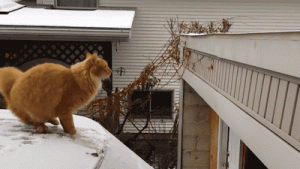
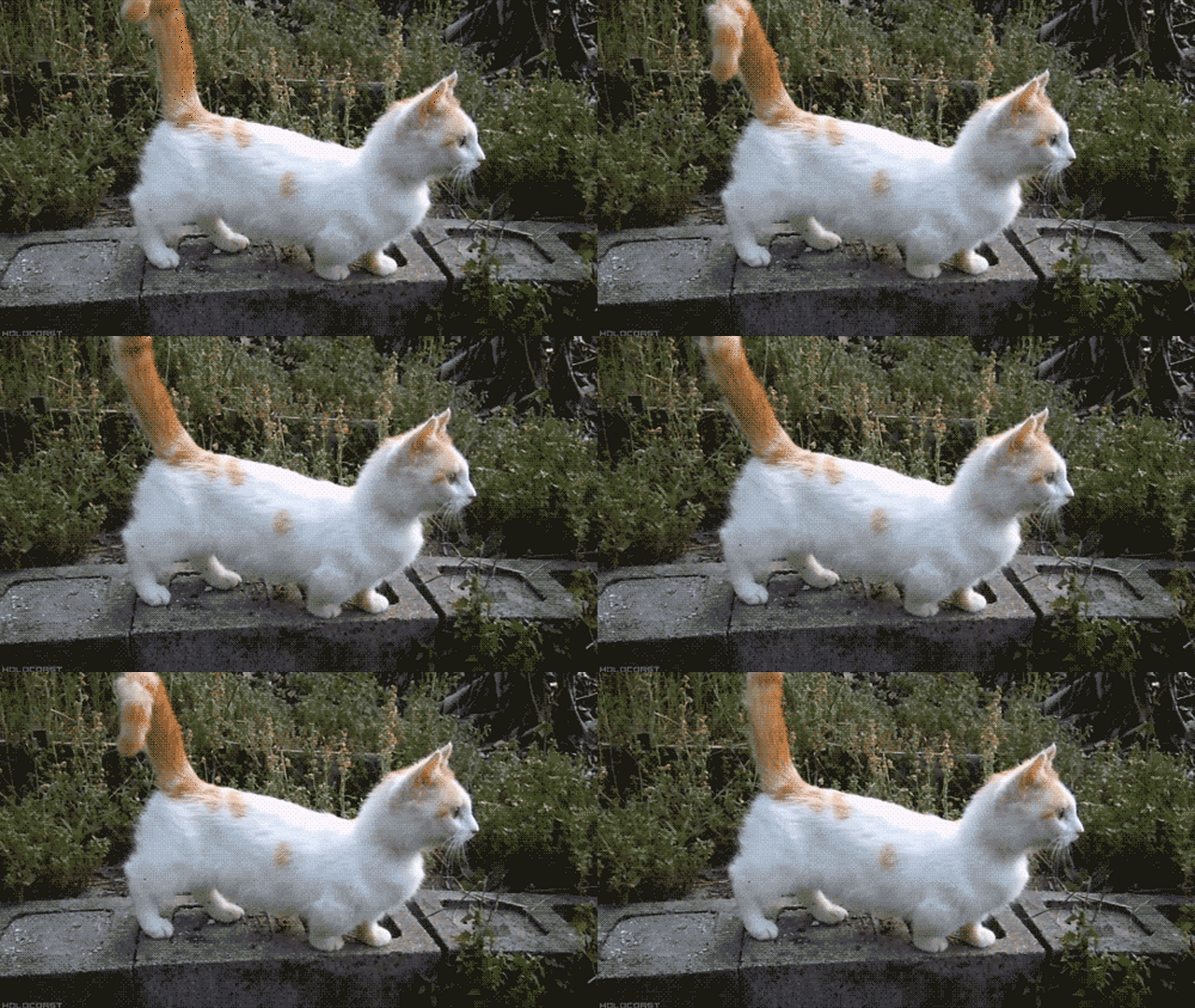
“You might have noticed that a cat’s tail can move in various ways: standing upright, twitching, sweeping back and forth like a windshield wiper, or tucked under its body, signaling a desire to be left alone. But beyond maintaining balance, what else do these tail movements mean? Experts in feline behavior agree that a cat uses its tail as part of its body language system to communicate a wide range of emotions with its companions. According to a study published in the Irish Veterinary Journal, cats rely on their eyes, ears, body, and tail to express fear, anger, happiness, contentment, and curiosity.”
-
Cats’ Tails Are Extremely Flexible
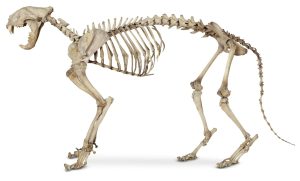
This is thanks to their unique anatomical structure. A cat’s tail is made up of 18 to 23 small bones called caudal vertebrae, which are connected like a chain, allowing the tail to move in multiple directions. When a cat experiences an emotion, its brain sends signals to the tail muscles via the pudendal nerve (which connects the tail muscles to the central nervous system). This communication happens almost instantaneously, enabling the cat to move its tail with lightning speed and precision. Mikel Delgado, an animal behaviorist at Purdue University in Indiana, explains that a tail held upright generally signals friendliness and a desire for social interaction. However, an upright tail is not universal. A study on communication between domestic and wild cats found that although wildcats exhibit many of the same social behaviors as domestic cats, they don’t use the “tail up” signal commonly seen in friendly interactions between house cats. This suggests that the “tail up” signal may have evolved during domestication. Delgado also notes that a twitching tail usually indicates excitement, while a raised tail could be a defensive response in wildcats to perceived threats, making them appear larger. This is similar to the human response of goosebumps when scared: the tiny muscles at the base of human hair follicles, called arrector pili, contract when we’re frightened, causing our hair to stand up. Likewise, at the base of a cat’s tail, there are similar muscles that cause the tail to puff up when they feel threatened, making them appear bigger and more intimidating.
-
A Low Tail Often Indicates Fear
When a cat is trying to make itself smaller or protect itself, it will often lower its tail. According to a 2021 guide on cat emotions, a frightened cat may tuck its tail under its body or wrap it around itself. If a cat is thrashing its tail on the ground or moving it rapidly from side to side or up and down, this could be a sign that it’s angry. Interpreting a cat’s emotional state through its tail might seem straightforward, but context is key. Cats’ interactions with humans and with other cats can be quite different. For example, a 2021 study published in the journal Animals found that when cats communicate with each other, they typically lower their tails, relying more on their ears to express their feelings. Erect ears indicate friendliness, while flattened ears signal hostility. Meanwhile, researchers observed that when cats approach humans, they often raise their tails, especially before rubbing against a person’s legs.
Next time your cat is ignoring you, take a look at what its tail might be trying to tell you.