Have you ever experienced something like this?You’re going about your chores, everything is going smoothly, when suddenly, your cat pounces on you and bites you out of nowhere. Or perhaps your once affectionate kitten has started avoiding you lately… In that moment, you can’t help but think back to the last time you trimmed their nails, forced them to brush their teeth, or even had a little tussle with them. Could it be that the kitten is holding a grudge?Let’s get straight to the point: According to most of the current research and the consensus among behavioral experts, cats generally do not hold grudges.
-
Cats’ Cognitive Limitations
Dr. Mikel Delgado, a certified cat behavior consultant with the International Association of Animal Behavior Consultants, says she would never use the phrase “holding a grudge” to describe cats, as it’s more of a human emotional projection. A 2009 study found that, compared to dogs, primates, and birds, cats have a very limited capacity for causal thinking. For example, crows can understand that by placing stones in a half-filled cup, the water will rise. On the other hand, a cat might think, “If I just stretch my paw a little further…” This suggests that cats’ cognitive abilities are not equipped to handle the complex emotions tied to things like holding grudges. In simpler terms, cats’ brains just aren’t wired for such complex emotional processing. Besides this indirect reasoning, there are also direct experiments that support this idea.
-
Cat Grudge Experiment
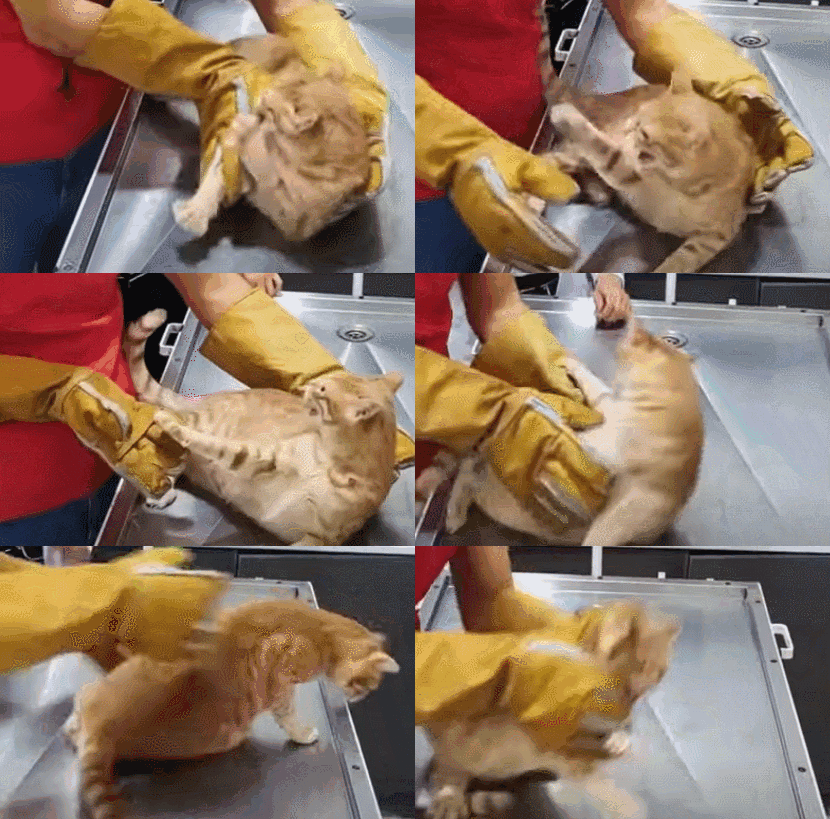
In 2018, a research team from the University of Guelph in Canada conducted an experiment to determine whether cats would avoid certain people or locations due to past experiences. The method used was a Conditional Place Avoidance (CPA) test, where cats were physically restrained for two minutes at a designated spot to simulate a physical exam. Afterward, the cats were placed on a specialized test track that led back to the same location. The researchers observed and recorded the cats’ behavior. At the same time, another team at the shelter conducted a test to observe whether cats would develop a dislike for the person who had restrained them. The experiment was repeated over 19 days. To eliminate other influences, the cats were not given any treats during the testing, and all actions were voluntarily performed by the cats. The results showed that cats did not actively avoid the location or the person involved in the restraint. The researchers hypothesized that since no real harm or threat was caused during the process, the cats did not develop any lasting resentment toward the person or location. Given that both theoretical and experimental evidence suggest cats don’t “hold grudges,” how can we explain behaviors that seem to resemble revenge?
-
Why Do Cats Display “Revenge Behavior”?
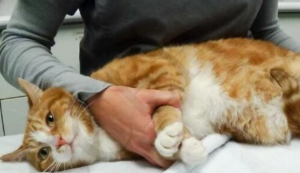
Let’s first explore what people typically consider to be “revenge behavior” in cats:Urinating or defecating outside the litter box.Scratching furniture.Avoiding you.Biting or attacking you.In fact, none of these behaviors are a result of cats “holding grudges.”According to research from Stanford University, urinating or defecating outside the litter box and scratching furniture are signs that a cat is expressing anxiety and discomfort. As for avoiding you, biting, or scratching, this behavior might be driven by the cat’s need to protect itself. For example, when you take a cat to be spayed or neutered, it may experience pain and discomfort afterward. In the cat’s mind, “pain” becomes associated with “doctor” or “vet clinic,” creating a negative link. The next time you take the cat to the vet, it may hiss or bite as a protective reaction, warning you (or anyone nearby) to avoid causing them pain again. How long does this last? That depends on the cat’s memory, how strong the association is, and how much the experience is considered life-threatening. For example, if an outdoor cat gets into a fight while passing through another cat’s territory, it may avoid that area in the future. However, there’s no need to worry too much, as most cats won’t dwell on negative experiences when resources are abundant. If you’re concerned that these associations could harm your relationship with your cat, there are ways to weaken or even eliminate these negative connections.
-
How to Weaken a Cat’s “Negative Association”?
Method 1: Use Positive Emotions to Counter Negative Ones.Research on cats’ memory shows that they are better at remembering information related to food and survival. So, when taking your cat to the vet, forcing them to brush their teeth, trim their nails, or do anything they don’t want to do, it’s a good idea to have their favorite treats on hand. Giving the cat its favorite snack during or after the procedure creates positive associations in their mind, helping to counterbalance or cover up the negative ones.Method 2: Let the Cat Take the Lead.This method works well for long-term habit-building, such as brushing your cat’s teeth. If you start by forcefully brushing the cat’s teeth, it might be the first and last time you attempt it. The proper approach is to gradually desensitize your cat to the experience. Pay attention to their emotional state, and slowly increase their tolerance, eventually allowing the cat to tolerate the process without becoming too stressed.
If a cat has developed a negative association with something, then simply doing these things may not be enough to make the cat “forgive” you. After all, how could a cat hold a grudge overnight? The real issue is that the cat owner probably hasn’t done a good enough job of apologizing or making amends!