

-
Experiments Prove That Cats Can Recognize Their Owners’ Voices
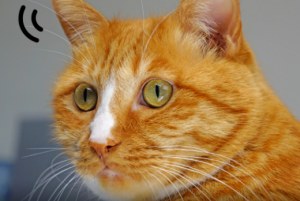
In 2013, Japanese scientists used a “habituation–dishabituation” experiment to confirm that domestic cats can indeed recognize their owners’ voices. A total of 20 cats participated in the study. Researchers first recorded the owner and four unfamiliar people (same gender as the owner) calling the cat’s name in a normal tone. They then repeatedly played these recordings.The results showed that when the recordings of strangers were played, the cats gradually became accustomed to the unfamiliar voices and their reactions decreased (because they treated the sounds like background noise).But once the cats had already adapted to the strangers’ voices, they showed increased responsiveness whenever they heard their owner’s voice again (because they recognized their owner).
-
Cats Have Extremely Sensitive Hearing and Can Identify Their Owner’s Footsteps From Far Away
Just like people have distinct voices, the loudness, rhythm, and frequency of each person’s footsteps also vary significantly. These subtle differences—barely noticeable to human ears—are greatly amplified for cats, allowing them to distinguish between different individuals with ease.This is because a cat’s hearing is 3 to 6 times more sensitive than a human’s. Humans can hear sounds ranging from 20 to 20,000 Hz, while cats can detect frequencies from 45 to 64,000 Hz, giving them access to many sounds we simply cannot perceive.Cats also have highly developed ear muscles, allowing their ears to rotate up to 180 degrees, which helps them capture sound waves from multiple directions and dramatically expand their hearing range.Additionally, the Henry’s pocket—a special structure on a cat’s outer ear—helps amplify high-frequency sounds and “filter noise,” enabling cats to distinguish between two separate sound sources located 15–20 meters away and spaced just 1 meter apart. This exceptional directional hearing explains why timid cats often react long before a stranger reaches the front door—quickly sensing the unfamiliar footsteps and darting away to hide.
-
Cats Do Welcome Their Owners Home—They Just Show It in Different Ways
Since cats can recognize their owners’ voices, why do some cats sit by the door waiting long before you arrive home, while others appear indifferent?In the 2013 study, although cats reacted only to their owner’s voice among a sequence of strangers’ voices, their individual responses varied widely. This means that most cats—if they want to—can identify your footsteps as soon as you enter the building or step out of the elevator. However, their greeting styles differ greatly.Some cats enthusiastically welcome their owners, while others offer more subtle responses—twitching their ears, flicking their tails, or simply acknowledging your presence in their understated feline way.
If you still have any questions about raising a cat, feel free to leave a comment, share photos, or join the discussion in the comment section so we can exchange cat-care tips together.