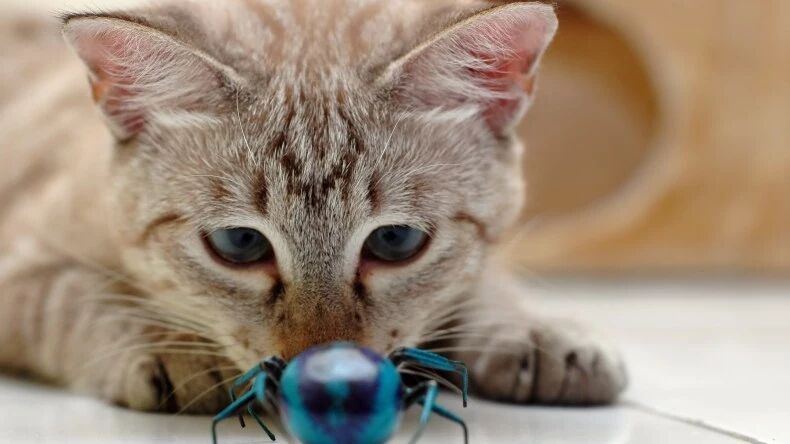
You don’t have to be a hardcore cat or dog lover to notice the differences between these two species — especially when it comes to things like eating bugs. These behaviors are everywhere. Dogs have been domesticated and are known as “man’s best friend,” while cats’ “social contract” with humans has more gray areas. It’s almost as if, after considering the food and warm beds we provide, they respond with, “Okay, fine, we’ll take care of the rodents, but the rest of your needs, you’re on your own.” We often view pictures or artworks featuring dogs as representations of family life. In contrast, the appearance of cats usually depicts wild carnivores lurking beneath the surface of our everyday reality. While we’ve certainly brought cats out of the jungle, we’ve never fully succeeded in bringing the jungle out of them. They still curl up in corners, waiting to ambush your feet as you walk by, or leave the messy spoils of their outdoor hunts on your favorite mat or carpet. Even the cutest little kittens have a touch of the “wild side.” Cats love to hunt. They are passionate about tracking, chasing, and catching prey. Even with food constantly filling their bowls, this instinct doesn’t go away. For indoor cats, who have limited opportunities to play outdoors, insects become the next best choice.
-
Why Do Cats Chase Bugs?
Chasing bugs is far more exciting than playing with a stick with a feather or a bell-tied ball. When compared to a creature desperately fighting for its life, these cat toys struggle to engage the “little wild beast” deep inside a cat’s soul. So, it’s no surprise that cats are so fond of hunting insects. But could this be harmful to their health? Dr. Megan Heron, a clinical assistant professor in behavioral medicine at Ohio State University, says that hunting behavior is minimally related to hunger. “Cats are obligate carnivores, meaning they rely on protein to survive, but a small amount of insects isn’t enough to serve as a primary protein source.” Obligate carnivores, also known as true carnivores, are animals that must rely on other animal proteins for survival. Other obligate carnivores include species like minks, cheetahs, dolphins, seals, sea lions, and walruses, as well as non-mammalian animals such as rainbow trout, salmon, eagles, crocodiles, and various snakes and amphibians. Cats require a lot of protein to maintain their health, and they use gluconeogenesis to produce glucose, relying on protein rather than carbohydrates to fuel this process. Dr. Jennifer Coates, a veterinarian from Fort Collins, Colorado, says that wild cats obtain their protein by hunting “house mice, field mice, birds, rabbits, and occasionally reptiles.” “As long as you’re feeding your cat high-quality, properly portioned, low-carb, high-protein food, they should be getting all the protein they need.” So, this bug-chasing behavior seems to be more rooted in behavior rather than biology. “For the most part, I think chasing and eating bugs is both fun and instinctive for cats because insects are fast-moving little things, and a cat’s brain is wired for pursuit,” says Dr. Heron. “Because cats aren’t domesticated to the same extent as their canine counterparts, house cats’ instincts to hunt and practice predatory behaviors remain quite active.” But, does eating bugs make your cat sick?
-
Parasites Inside Bugs
“Parasites in bugs aren’t typically a big problem when cats eat them,” says Dr. Katie Grzyb, a veterinary expert. “The risk of toxicity from eating insects is very small.” Some insects carry parasites that can infect cats, such as pinworms or stomach worms, but these cases are rare. Bugs can also cause gastrointestinal irritation in cats, usually resulting in vomiting, diarrhea, or both. If symptoms are severe or don’t subside within a couple of days, it’s best to contact your vet. However, Dr. Coates also mentions that certain insects, if they attach to a cat’s fur, can lead to more serious issues. “Fleas can carry tapeworms or cause anemia in cats. While ticks aren’t technically insects, they can spread several diseases between animals and humans.” Dr. Grzyb adds, “Stings from bees or spiders can trigger localized allergic reactions, which often require veterinary treatment.”
-
Could Pesticides Make Bugs Toxic to Cats?
We all try our best to keep bugs out of the house, and many people use pesticides when insects invade. Since pesticides are often on the insect’s body or inside it while it’s still alive or dying, pet owners worry that ingesting a poisoned bug might harm their pets. Fortunately, in most cases, this concern is unnecessary. Dr. Grzyb explains, “The toxin levels in dead bugs are so low that pet owners almost never notice any side effects from feeding them to their pets.” However, if a cat directly comes into contact with pesticides, the situation can be quite different. When pet owners prepare to use pesticides or other chemicals in their homes, it’s always best to do some research — in other words, read the label. Dr. Grzyb advises, “Pet owners should read the instructions carefully when using pesticides to ensure they don’t contain pyrethrins, which can cause severe tremors, fever, and other acute illnesses in some feline species.” On the other hand, she also says, “I’ve seen many cases where cats ingested cockroach bait, but the bait didn’t cause any serious side effects, just mild gastrointestinal upset.” “If pet owners are concerned their pets have ingested pesticides, I recommend they contact a local vet or poison control hotline, such as the ASPCA’s Animal Poison Control,” Dr. Grzyb says. “When contacting them, it’s best to have as much information about the product as possible, such as taking the product’s bottle so you can read the active ingredients.”
-
Do Cats Miss Their Hunting Lives?
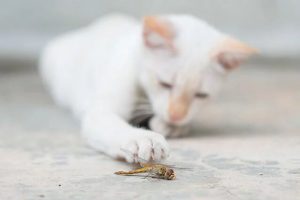
Are our cats chasing insects because they miss their instinctual daily hunting routines, with bugs conveniently serving as replacement prey for play, or is this simply an extension of kitten behavior? “Yes, I’m sure that cats use catching insects as a substitute for hunting,” says Dr. Grzyb. “Kittens are usually more playful and mischievous, so they ‘hunt’ more often, but this is mostly just playtime.” “If you watch your cat, you’ll see that they don’t often eat the insects they catch,” she continues. “They capture, bat, and hold the prey in their mouths, but usually don’t swallow it. So, while we can’t be certain, it seems that house cats may catch small bugs simply to pass the time.”
So, perhaps a cat’s hunting behavior isn’t the best news for the bugs in your home, but that’s simply because cats are cats — they maintain their wild instincts and enjoy life.